
Port Royal Sound on Hilton Head’s North End
The deep, salty sound off the island’s north end: its history, its dolphins and fishing, and where to see it from shore.
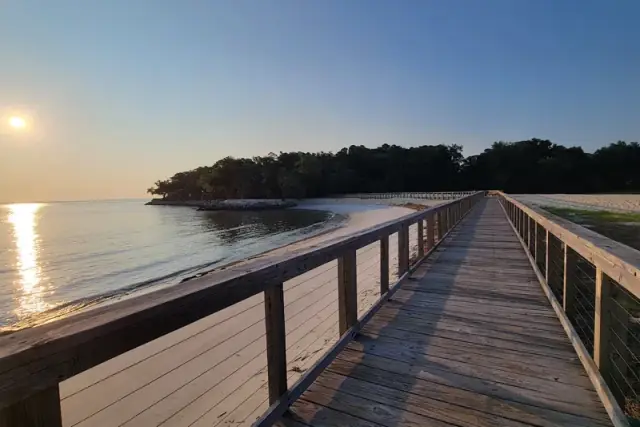
The boardwalk at Dolphin Head, on Port Royal Sound in Hilton Head Plantation.
- Where
- off Hilton Head’s north end
- Public beach on it
- Fish Haul Beach Park
- Depth
- nearly 30 feet over the bar at any tide
- Tides
- a 6 to 8 foot rise and fall
Port Royal Sound is the big, deep sound off the north end of Hilton Head, where the Broad and Beaufort rivers meet the Atlantic. The island’s north-end beaches face it instead of the open ocean, the dolphin boats from Skull Creek run out into it, and its harbor is the reason Hilton Head shows up in the history books at all.
What Is Port Royal Sound?
It is a wide arm of the sea, formed where the Broad River and the Beaufort River come together, and it opens to the ocean off Hilton Head’s north end. Very little fresh water flows into it, so the tide that pours in twice a day stays salty far up its rivers. Those tides rise and fall 6 to 8 feet, uncovering wide flats of sand, mud and oyster bank at low water, and the salt marsh around the sound is home to shrimp, oysters, fish and wading birds.
It is also deep. With nearly 30 feet of water over the bar at any tide, Port Royal Sound is the deepest natural harbor on the Atlantic coast south of New York. Its southern sister, Calibogue Sound, wraps around the other end of the island.
Port Royal Sound History
1562: the French captain Jean Ribault sailed into the sound and left about two dozen men in a small fort, Charlesfort, named for King Charles IX. It was the earliest French settlement in what is now the United States, and it did not last.
1663: Captain William Hilton marked the high headland at the entrance to the sound. It became known as Hilton’s Head, and the island took the name. See William Hilton.
November 7, 1861: a Union fleet fought its way into the sound. Fort Walker on Hilton Head fell, and the island became the headquarters of the Union blockade of the southern Atlantic coast.
The deep, sheltered harbor is what drew each of them. For the rest of the story, see Hilton Head history.
Dolphins and Boating on Port Royal Sound
Bottlenose dolphins live in the sound and the creeks around Hilton Head all year. The north-end dolphin cruises leave from the marinas on Skull Creek, the tidal channel behind the island, and run the creek and the sound. See Hilton Head dolphin tours. Skull Creek is also where the Intracoastal Waterway leaves Port Royal Sound to run down the back of the island.
Fishing Port Royal Sound
The oyster banks along the sound hold redfish, spotted seatrout, flounder and black drum through the year, and tripletail lie up beside crab-pot buoys and channel markers in summer. From shore, Fish Haul Beach Park is the public spot for surf and inlet fishing on the sound. Fish on the moving tide, and check the Hilton Head tide times before you go. See Hilton Head fishing for charters and seasons.
Where to See Port Royal Sound on Hilton Head
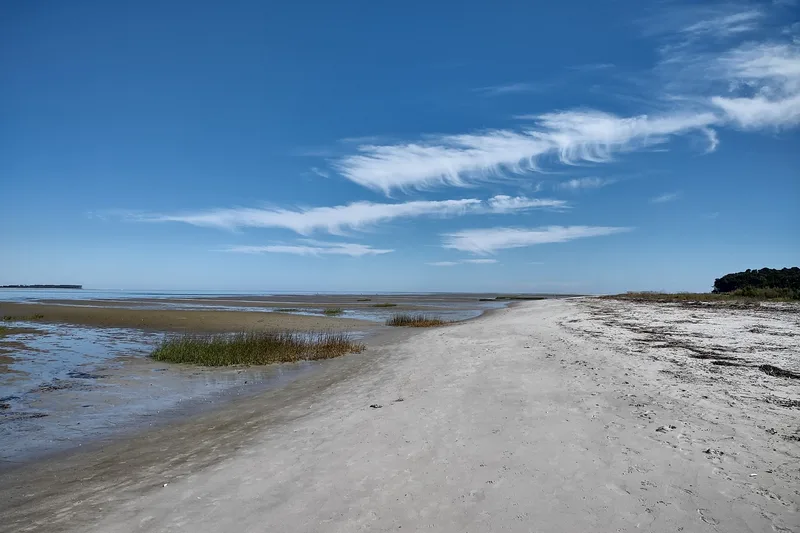
Fish Haul Beach Park: the public one, at 124 Mitchelville Road. The water is calmer than on the ocean beaches, and low tide opens a wide flat for shells and shark teeth.
Dolphin Head Park: a bluff and boardwalk over the sound inside Hilton Head Plantation, for residents and their guests.
Port Royal Beach: the shore of the gated Port Royal Plantation, facing both the ocean and the sound, for its owners, tenants and guests.
Off the island, the Port Royal Sound Foundation’s Maritime Center in Okatie, on SC 170 north of Bluffton, is a free museum about the sound, with aquariums of its fish and a dock over the Chechessee River. It is open Tuesday through Saturday; check its hours before you drive up. It is one of the stops in things to do in Bluffton.
More on the Water
Calibogue Sound lies between Hilton Head and Daufuskie: the boats that cross it, its dolphins and fishing, and where to see it from land.
Fish Haul Beach Park, formerly Mitchelville Beach Park, on Hilton Head Island: address, parking, and amenities for this sound-side beach in Bay Gall.
Fort Walker was the Confederate fort at the Battle of Port Royal in 1861, later Fort Welles. Its history and how to see the site today.
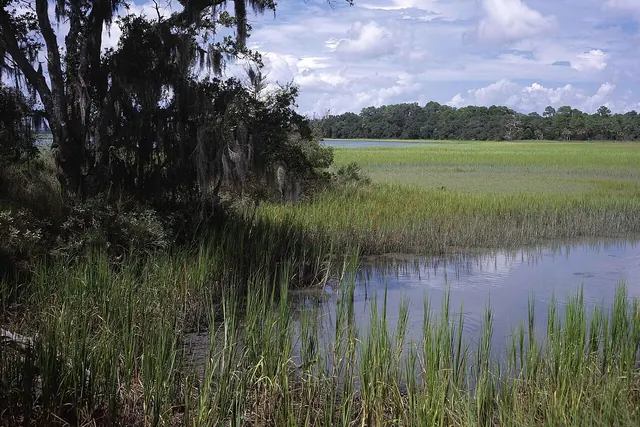
Hilton Head wildlife and nature, answered: dolphins, alligators, birds, Spanish moss, pluff mud and butterflies, and where to see them safely.
Frequently Asked Questions
Where is Port Royal Sound?
Off the north end of Hilton Head Island in Beaufort County, South Carolina, where the Broad and Beaufort rivers meet the Atlantic. The island’s north-end beaches face it.
How deep is Port Royal Sound?
There is nearly 30 feet of water over its bar at any tide, which makes it the deepest natural harbor on the Atlantic coast south of New York.
Can you go to the beach on Port Royal Sound?
Yes. Fish Haul Beach Park, at 124 Mitchelville Road, is the public beach on the sound. Dolphin Head Park and Port Royal Beach are private to their communities.
When did Europeans first come to Port Royal Sound?
In 1562, when the French captain Jean Ribault sailed in and left a small garrison at Charlesfort. Hilton Head itself is named for Captain William Hilton, who marked the headland at the sound’s entrance in 1663.
What happened at Port Royal Sound in the Civil War?
On November 7, 1861, a Union fleet took the sound. Fort Walker on Hilton Head fell, and the island became the Union’s base for the blockade of the southern Atlantic coast.
Local guides like this come standard for Guests of Partner Properties — one small part of what a Partner Property gives every guest.
Book Partner Properties