
Lizards on Hilton Head Island
Anoles, skinks, fence lizards and legless glass lizards: which is which, and none of them bite.
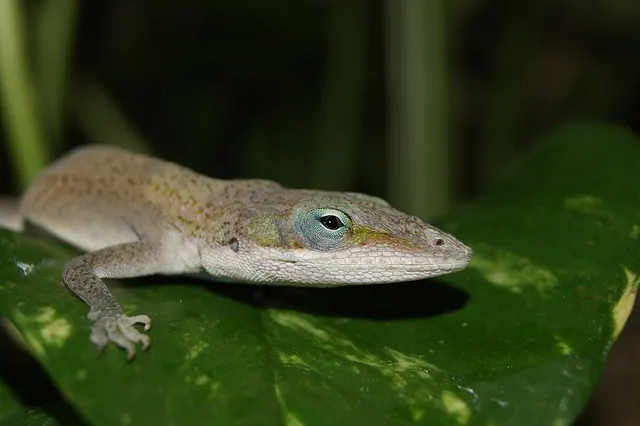
A green anole in its brown phase on a leaf.
The lizards you see on Hilton Head are small, quick and harmless. Lizards in South Carolina are all non-venomous, and the ones that turn up on porches, fences and palmetto trunks along the coast are anoles, skinks and fence lizards, with the occasional glass lizard in the grass.
Green Anole and Brown Anole
The little lizard clinging to a screen or a leaf is usually a green anole. It is the only anole native to the United States, and it can change from dark brown to bright green (the photo above shows one in its brown phase). Males flash a pink throat fan to claim territory or attract a mate. Green anoles spend their time up in shrubs, trees and on walls. The brown anole is an introduced species. It is brown with variable patterning, shows an orange-red throat fan, and is more often found on the ground.
Skinks
Skinks have smooth, shiny scales and a streamlined body. South Carolina PARC lists four on the coast: the common five-lined skink, the southeastern five-lined skink, the broad-headed skink and the ground skink. Young five-lined skinks have a vivid blue tail, which surprises people who find one under a flowerpot or woodpile.
Eastern Fence Lizard
The eastern fence lizard has rough, patterned scales and likes dry, open woods, fence posts and stumps. When startled it runs up the nearest tree or post. In breeding season males show iridescent blue on the throat and the sides of the belly.
Glass Lizards: the Legless Lizards
Glass lizards have no legs, so they are easy to mistake for snakes. The tell is that a glass lizard has external ear openings and eyelids that move, which a snake does not. Three occur on the coast: the eastern glass lizard, the slender glass lizard and the rare island glass lizard. The eastern glass lizard is the longest lizard in South Carolina. If you aren’t sure whether it is a lizard or a snake, give it room and read our page on snakes on Hilton Head.
Where to See Them
Anywhere with sun and cover: porch rails, fences, tree trunks and garden beds on a warm day. Trails like those in the Sea Pines Forest Preserve and on Pinckney Island are good places to look. Lizards are most active in warm weather and fade away in winter cold. Look, don’t grab: they bolt, and wild animals are best left where they are.
More Nature on Hilton Head
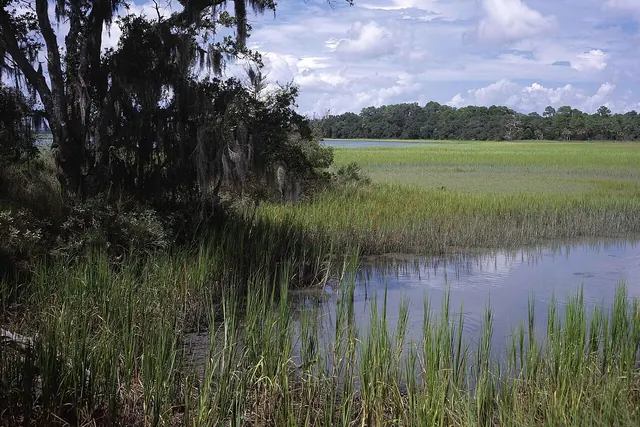
Hilton Head wildlife and nature, answered: dolphins, alligators, birds, Spanish moss, pluff mud and butterflies, and where to see them safely.
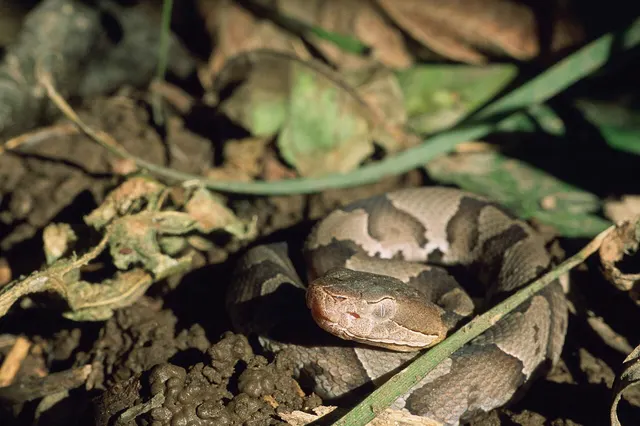
Snakes on Hilton Head Island: the common harmless species, the six venomous South Carolina snakes, what to do if you see one and what to do after a bite.
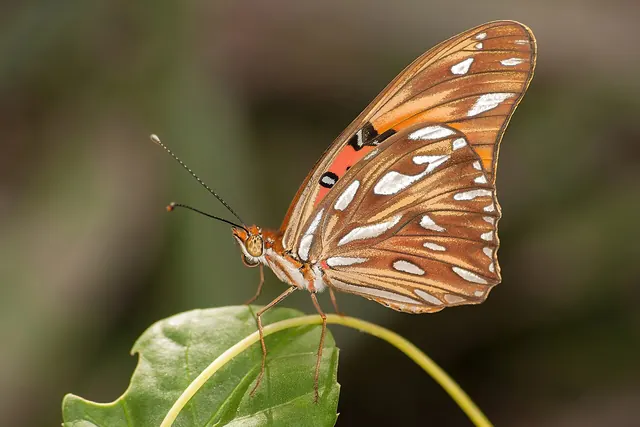
The orange butterfly in every Lowcountry garden is the gulf fritillary. How to tell it from a monarch, its caterpillars, passionflower and when to see it.
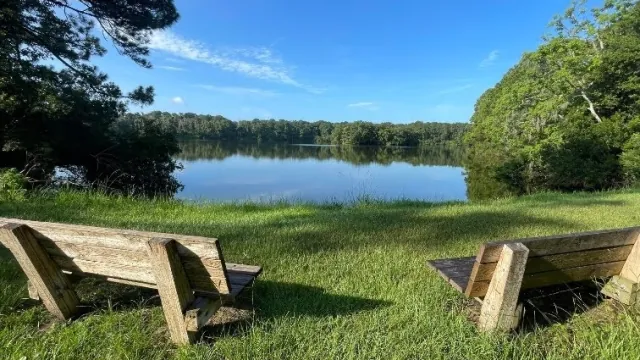
Sea Pines Forest Preserve on Hilton Head: 605 acres, trails, the Shell Ring, Fish Island, alligator tours, hours, parking, and the gate fee.
Frequently Asked Questions
What lizards live in South Carolina?
On the coast: the green anole, the introduced brown anole, the eastern fence lizard, four skinks (common and southeastern five-lined, broad-headed and ground) and three glass lizards.
What is the little green lizard on my porch?
Almost certainly a green anole, the native one. It turns brown when cool or stressed, and males flash a pink throat fan.
Are any lizards in South Carolina venomous?
No. South Carolina’s venomous reptiles are all snakes.
Why does a skink have a blue tail?
Young five-lined skinks have a bright blue tail. It fades as they grow.
Is a glass lizard a snake?
No. It has no legs, but it has external ear openings and movable eyelids, which snakes lack.
Local guides like this come standard for Guests of Partner Properties — one small part of what a Partner Property gives every guest.
Book Partner Properties