
Tripletail Fish: Where, When and How to Catch One
The fish that floats beside crab-pot buoys: where to look around Hilton Head, how to catch one, and how it tastes.
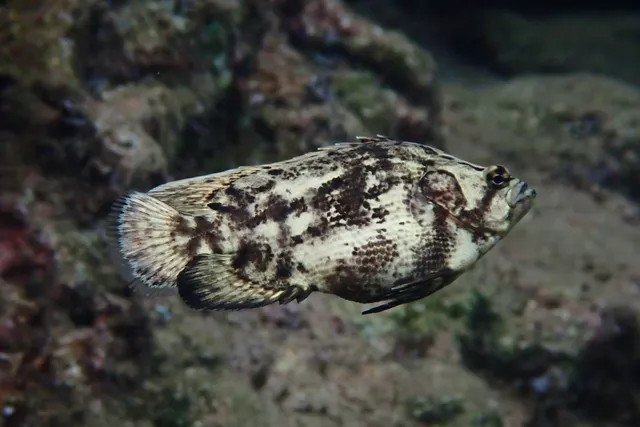
Photo: an Atlantic tripletail (Lobotes surinamensis). Sönke Bonde, iNaturalist, CC0.
Tripletail are the fish you spot before you catch. In summer they float on their sides at the surface beside a crab-pot buoy or a channel marker, looking like a brown leaf or a piece of drifting trash, until a live shrimp lands near them. Hilton Head’s creeks and sounds are a good place to find one, and a good guide will put you on them. This page covers what a tripletail is, where and when to look, how to catch one, the South Carolina limits and how it tastes.
What a Tripletail Is
The Atlantic tripletail is a deep-bodied, mottled brown or yellow-brown fish with a blunt face and big eyes. Its second dorsal fin and its anal fin are long, rounded and set far back, and with the tail fin they look like three tails, which is where the name comes from. Most fish landed here run from a few pounds to about fifteen. Some people call it a blackfish or a flasher.
The floating is a habit. Tripletail lie on one side near the surface beside anything that drifts or sticks up out of the water, which gives them cover and a place to ambush small crabs and shrimp. That is also why they are one of the few fish you can sight-fish: you look for a shape beside the float, then cast to it.
Where to Find Tripletail Around Hilton Head
Look for floating structure in the water, in the creeks and sounds close to the island: crab-pot buoys, channel markers and nav buoys, clumps of floating grass and wood, and anything else that rides the tide. Port Royal Sound, Calibogue Sound and the big creeks such as Broad Creek and Skull Creek all see tripletail. Nearshore, they also hang under floating debris and weed lines.
This is boat fishing. A shallow-draft boat with a high platform makes the fish easier to see, which is one reason many anglers book an inshore trip with a captain who knows how to spot them. Browse the Hilton Head fishing charters to find one, or start with our fishing guide if you’re planning the whole trip.
When to Go: Tripletail Season
Tripletail follow the warm water. They arrive in South Carolina as the sounds warm in late spring, are around through the summer, and head south and offshore as the water cools in fall. June through September is the heart of it. Calm, sunny days are best, because you can see them, and they spook easily when a boat comes in noisy or fast.
Pick a day with a light wind, and time the trip around the tide. The Hilton Head tide chart has the times.
How to Catch One
Look first: idle along the markers and buoys with polarized sunglasses on, and watch for a flat shape or a dark tail at the surface.
Bait: a live shrimp is the standard. Small live crabs and soft-plastic shrimp or jigs also work.
Rig: medium spinning gear, a 20 to 30 pound fluorocarbon leader and a 1/0 to 3/0 hook, with a popping cork if the fish is holding deeper or no weight at all if it is on top.
The cast: land the bait a few feet past the fish and ease it into view. A splash right on its head sends it down.
The fight: a tripletail runs, shakes its head and heads for the nearest structure, so keep the rod up and turn it away from the buoy line.
South Carolina Size and Bag Limits
The South Carolina Department of Natural Resources (SCDNR) sets the rules. A tripletail has to be at least 18 inches long, and you can keep 3 per person per day, with no more than 9 per boat per day. Anyone 16 or older needs a South Carolina saltwater fishing license. Check the current limits on the SCDNR website before you go, since the state can change them.
What Does Tripletail Taste Like?
Very good, and it is why people hunt them. The meat is firm, white, mild and a little sweet, with large flakes, and cooks like grouper or snapper without the fishy taste. It stays moist on the grill or in the pan, takes a blackening rub or a simple lemon-butter sauce, and is excellent fried or in fish tacos. A tripletail is a poor fish to clean, with thick skin and rough scales, so most people skin the fillets.
If you would rather leave the cleaning to someone else, our guide to seafood restaurants on Hilton Head is the place to start. Some charter captains will also clean your catch at the dock; ask when you book.
Frequently Asked Questions
What is a tripletail fish?
An Atlantic tripletail is a deep-bodied, mottled brown fish with long rounded dorsal and anal fins set far back, which with the tail look like three tails. It floats on its side near the surface beside buoys and debris.
Why does a tripletail float on its side?
It lies on one side beside floating structure, such as buoys, weeds and driftwood, where it looks like debris. The cover helps it ambush small crabs and shrimp.
Where can you catch tripletail around Hilton Head?
Near floating structure in the creeks and sounds: crab-pot buoys, channel markers and drifting weed, in places like Port Royal Sound, Calibogue Sound, Broad Creek and Skull Creek. A charter captain who sight-fishes for them helps a lot.
When is tripletail season in South Carolina?
They arrive as the water warms in late spring and stay through summer, with June through September the best. They head south and offshore as the water cools in fall.
What is the tripletail limit in South Carolina?
At least 18 inches, 3 per person per day and no more than 9 per boat per day, under SCDNR rules. Anglers 16 and older need a saltwater fishing license.
What does tripletail taste like?
Firm, white, mild and slightly sweet, with large flakes. People compare it to grouper or snapper, and it is among the best-eating fish in the sounds.
What is the best bait for tripletail?
Live shrimp, cast just past the fish. Small live crabs and soft-plastic shrimp or jigs also work.
Local guides like this come standard for Guests of Partner Properties — one small part of what a Partner Property gives every guest.
Book Partner Properties