
Pluff Mud: What It Is and Why It Smells
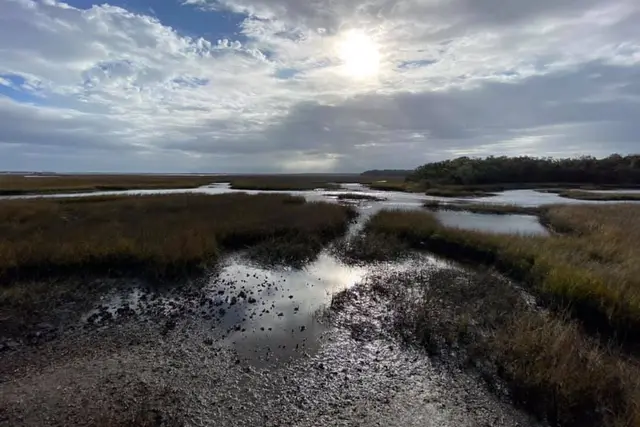
The soft, sulfur-smelling mud of the Lowcountry marsh: what it is, why it smells and how to walk near it.
Marsh mud at low tide in a Florida preserve (National Park Service photo). The same pluff mud lines every tidal creek around Hilton Head.
Pluff mud is the soft, gray-brown, sulfur-smelling mud of the Lowcountry salt marsh. It lines every tidal creek on Hilton Head, it shows at low tide, and it is the reason the marsh smells the way it does. Locals call the smell the scent of home, and the mud itself is the engine that keeps the marsh alive.
What Pluff Mud Is
It is a mix of very fine silt and clay carried in by the tides, the rotting remains of marsh plants and countless microscopic organisms. The mud is packed with so little oxygen that the plant matter does not fully rot away: it piles up as a rich, black-brown paste under the surface.
Why Pluff Mud Smells
The smell is a rotten-egg, sulfur odor. It comes from bacteria that break down the buried plant matter without oxygen, and it is strongest at low tide, when the mud is exposed to the air and a wading bird’s footstep can let a pocket of gas escape. It is a natural smell, a sign of a working marsh, not of pollution.
Salt Marsh Grass: What Grows Out of It
The tall, bright green salt marsh grass along the creek banks is smooth cordgrass, Spartina alterniflora. It handles a daily soaking in salt water, and its roots hold the mud together and slow the tide. Each fall the grass dies back and rots into the mud, which is what feeds the bacteria, the crabs, the snails and the oysters. That food web is why the marsh is a nursery for shrimp, crabs and young fish, and why the mud steadies the shoreline as well.
Can You Walk in Pluff Mud?
You can, and it can be hard to get out of. The surface looks solid and the mud underneath holds on tight, and the oyster shells along the banks are sharp. If you sink in, don’t yank your leg straight up: rock your foot side to side to break the suction, and lean forward to spread your weight. A lost shoe usually stays lost.
Stay on boardwalks, docks and sand. Pluff mud is a creek-bank and marsh feature, not a beach one.
Wear closed shoes you don’t mind losing if you wade for crabs or oysters. Oyster shell cuts.
Watch the tide. The mud floods fast on a rising tide: check the Hilton Head tide chart before you head out.
Keep kids and dogs close.
Where to See the Marsh
Any public dock over a tidal creek shows it at low tide, and the creeks around the island, Broad Creek and Skull Creek among them, are lined with it. The refuge trails on Pinckney Island look out over miles of cordgrass. To see the marsh from the water at high tide, go kayaking through the creeks, when the water covers the mud and you can paddle between the grass. Watch for fiddler crabs scuttling over the mud at low tide, and oyster beds exposed along the banks.
More Nature on Hilton Head
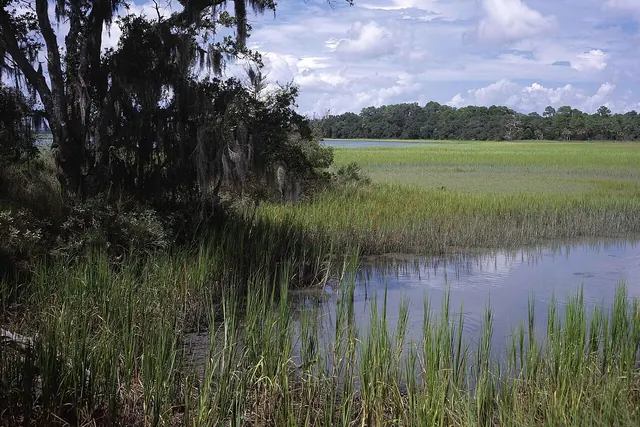
Hilton Head wildlife and nature, answered: dolphins, alligators, birds, Spanish moss, pluff mud and butterflies, and where to see them safely.
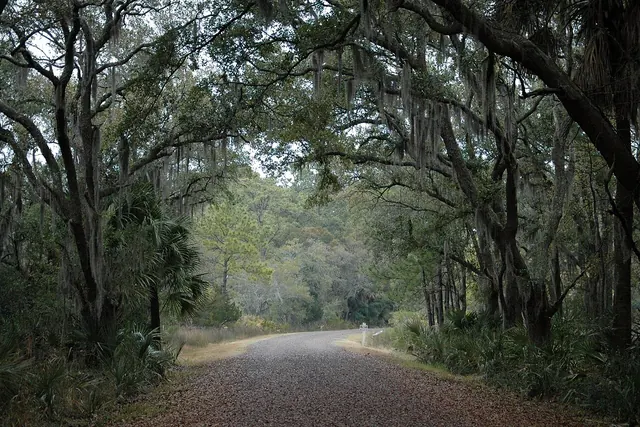
What is Spanish moss, where does it come from and what trees does it grow on? It is a flowering plant, not a moss, and it does not kill the oaks.
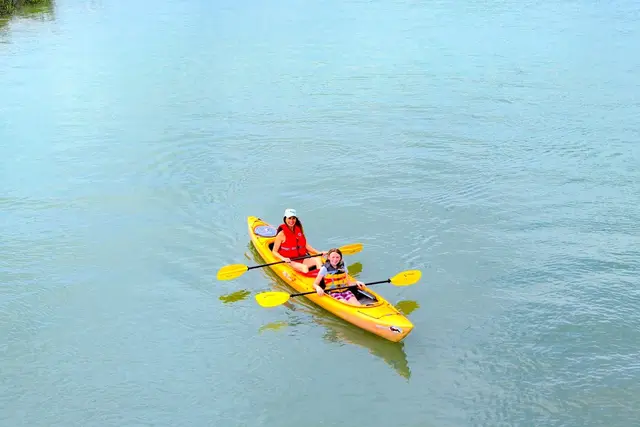
Kayak Hilton Head's marsh creeks with a guide or on your own: dolphin kayak tours, rentals and prices from seven outfitters, calm creeks and launches.
Frequently Asked Questions
What is pluff mud?
The soft, sticky gray-brown mud of the Lowcountry salt marsh, made of fine sediment, decaying marsh plants and tiny organisms. It lines the tidal creeks and shows at low tide.
Why does pluff mud smell?
Bacteria break down the buried plant matter in mud with almost no oxygen, and they give off a rotten-egg, sulfur smell. It is strongest at low tide and is a normal sign of a healthy marsh.
Can you get stuck in pluff mud?
Yes. It can grip your leg hard. Rock your foot side to side to break the suction rather than pulling straight up, and lean forward to spread your weight. Oyster shells in it can cut.
What is the grass that grows in the salt marsh?
Smooth cordgrass, Spartina alterniflora. It tolerates daily salt water, holds the mud in place and feeds the marsh food web when it dies back each fall.
Where is pluff mud on Hilton Head?
Along every tidal creek and marsh edge, visible at low tide from public docks and trails such as the refuge on Pinckney Island. It is not found on the ocean beaches.
Is pluff mud good for anything?
It is the base of the marsh food web. Crabs, snails, oysters, shrimp and young fish live in and on it, and it steadies the shoreline.
Local guides like this come standard for Guests of Partner Properties — one small part of what a Partner Property gives every guest.
Book Partner Properties