
Alligators on Hilton Head Island
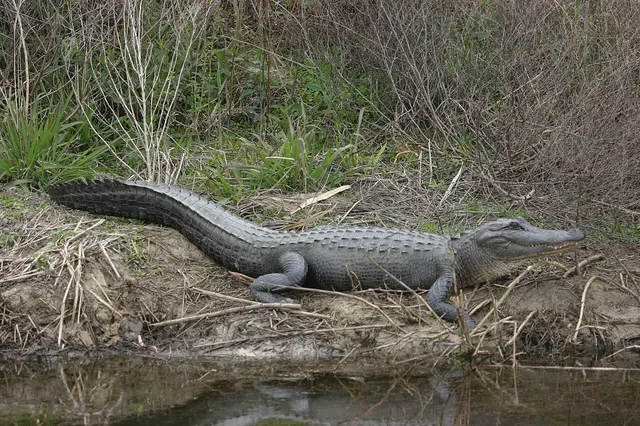
Yes, they live here. Where you see them, how far back to stay, and who to call.
An American alligator basking on a bank at Lacassine National Wildlife Refuge, Louisiana.
Yes, there are alligators on Hilton Head Island. The American alligator is the island’s largest freshwater reptile, and you will see one sunning on a lagoon bank sooner or later. They are not aggressive toward people who leave them alone, and the rules that keep it that way are simple: stay back from the water’s edge, keep children and pets away from it, and never feed one.
Are There Alligators on Hilton Head Island?
The Town of Hilton Head Island calls the American alligator the island’s largest freshwater reptile and a keystone species: they dig holes, trails and nests that other animals use, and in dry spells an alligator hole is sometimes the only water in an area. Wading birds often nest over water where alligators live, because the alligators keep other predators away from the nests. Alligators Hilton Head residents see most live in the lagoons, ponds and ditches of the plantations, in golf course water hazards and along the marsh creeks.
What an Alligator Looks Like, and Where You See One
Adults are black with a creamy white underside and rough, ridged scales down the back. Young alligators have yellow and white bands. They range from about 9 inches to 13 feet. An alligator lying on the bank is almost always basking to warm up, and it is most active from dusk to dawn. They eat fish, turtles, wading birds, snakes, frogs and small mammals.
The easiest places to see Hilton Head gators are the lagoons in the Sea Pines Forest Preserve and around Fish Island, where a boat tour gets you close without walking up to the water. The Sea Pines Forest Preserve page has the tour and the gate details.
How to Stay Safe Around Alligators
Keep your distance. South Carolina’s Department of Natural Resources (SCDNR) says there is no perfect distance, but at least 10 feet back from the water’s edge, whether or not you see an alligator, is a good starting point. Inside Sea Pines, the resort’s own rule is at least 60 feet (four car lengths) from any alligator.
Watch children and pets. Keep dogs on a leash near any water. An alligator can mistake a pet or a splashing person for natural prey.
Never feed one, directly or by accident. Feeding alligators is illegal in South Carolina. SCDNR counts feeding turtles or fish where alligators live and cleaning fish over the water, too.
Don’t get between an alligator and the water. That is where it feels safe, and it is when most animals on land act defensively.
Leave nests and small alligators alone. A small one has a mother nearby.
Be careful at dusk and after dark, when alligators are most active.
If an Alligator Moves Toward You
Alligators do not hunt on land and generally do not chase people. SCDNR says the usual reason one comes your way is that you are between it and the water, or too close. It may open its mouth, hiss and lunge forward a foot or two as a bluff. Stay calm, don’t approach it, and back away from the alligator and the water, and it will calm down and head for the water. Alligators are more mobile in mating season, so you can meet one on land or somewhere new.
Do Alligators Go Into Saltwater?
Alligators are mainly freshwater animals, and the Town says the island’s coastal marshes make good habitat. The Town lists brackish and saltwater areas among the places they can be found. So one in a tidal creek is not unheard of, but the lagoons and ponds are where you will find them, and the beach is not.
Alligator in Your Yard or on a Rental’s Pond
Seeing an alligator in an unexpected place does not make it a nuisance, and most move on if left alone. The Town defines a nuisance alligator as one that has lost its fear of people (usually from being fed), may harm people or property, or is trapped somewhere it should not be. SCDNR does not relocate alligators, because they find their way back, and nuisance alligators are euthanized. If you live in an HOA or a property management group, report it to them first. Otherwise call the SCDNR regional nuisance alligator coordinator at 803-625-3569. For an alligator-related emergency, SCDNR lists 1-800-922-5431; call 911 for an injury.
Vacation rental guests staying on a lagoon or golf course should be told the same rules: no feeding, no walking dogs at the water’s edge, no swimming in ponds.
More Nature on Hilton Head
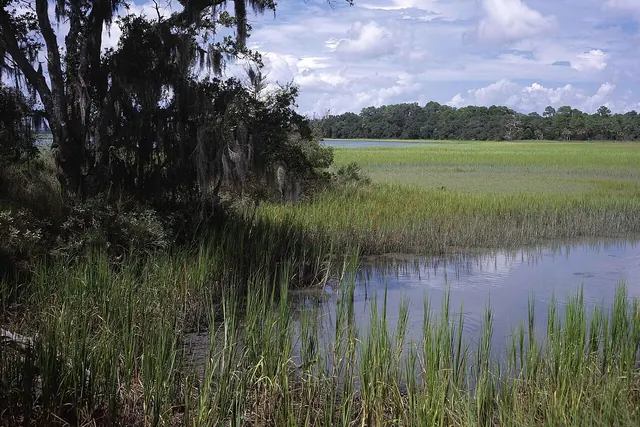
Hilton Head wildlife and nature, answered: dolphins, alligators, birds, Spanish moss, pluff mud and butterflies, and where to see them safely.
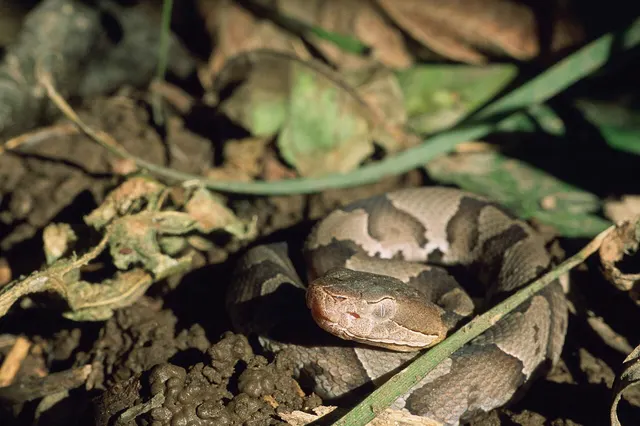
Snakes on Hilton Head Island: the common harmless species, the six venomous South Carolina snakes, what to do if you see one and what to do after a bite.
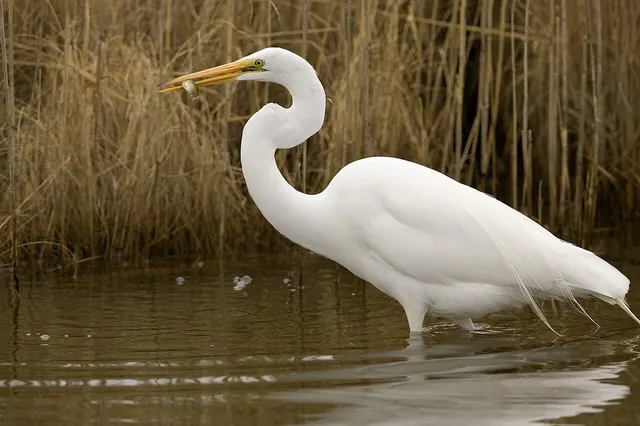
Birds of Hilton Head SC: herons, egrets, roseate spoonbills and anhingas, the best places to see them, and the Hilton Head Audubon Society's bird walks.
Sea Pines Forest Preserve on Hilton Head: 605 acres, trails, the Shell Ring, Fish Island, alligator tours, hours, parking, and the gate fee.
Frequently Asked Questions
Are there alligators on Hilton Head Island?
Yes. They live in the freshwater lagoons, ponds and golf course water hazards, and in the marsh creeks. They bask on banks and are most active from dusk to dawn.
Do alligators go into saltwater?
They are mainly freshwater animals, but the Town of Hilton Head Island lists brackish and saltwater areas among the places they can be found.
How far should I stay from an alligator?
SCDNR says there is no perfect distance, but at least 10 feet back from the water’s edge, whether or not you see an alligator, is a good starting point. Never approach one.
Can I feed alligators?
No. Feeding alligators is illegal in South Carolina and dangerous, because a fed alligator loses its fear of people. That includes feeding turtles or fish where alligators live.
Do alligators chase people?
Generally not. An alligator that moves toward you on land is usually trying to get to the water or scare you off. Back away from it and the water.
Is it safe to walk a dog near a lagoon?
Keep dogs on a leash and away from the water’s edge. Alligators can mistake a pet for natural prey.
Who do I call about an alligator?
In an HOA or a property management group, report it to them first. Otherwise call the SCDNR regional nuisance alligator coordinator at 803-625-3569. Call 911 for an injury.
Local guides like this come standard for Guests of Partner Properties — one small part of what a Partner Property gives every guest.
Book Partner Properties