
Fort Walker on Hilton Head Island
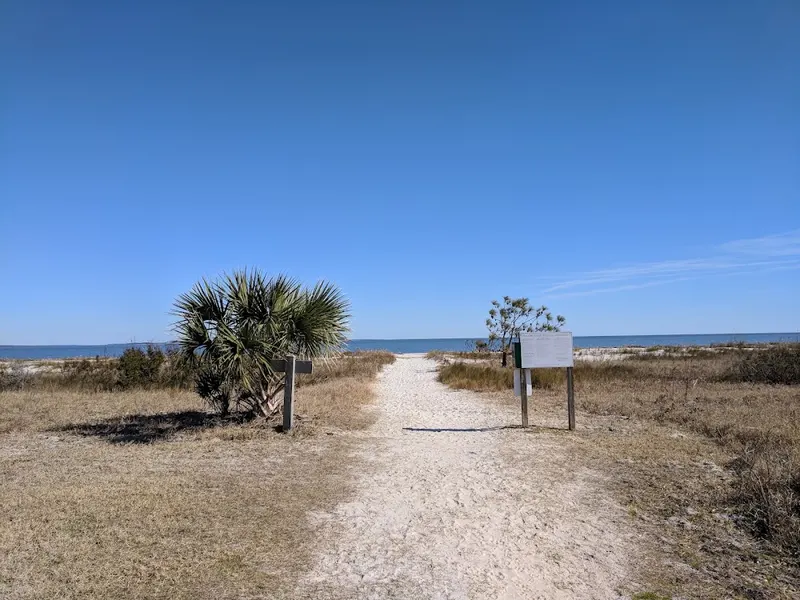
The Confederate fort whose guns opened the Battle of Port Royal in 1861, later the Union’s Fort Welles, now inside Port Royal Plantation.
- Built: July 1861
- Battle: November 7, 1861
- Renamed: Fort Welles, November 8, 1861
- Visit: inside Port Royal Plantation, or on a museum tour
Fort Walker was the Confederate earthwork that guarded the entrance to Port Royal Sound from the northeast tip of Hilton Head Island. General P. G. T. Beauregard recommended it in May 1861, on Coggins Point Plantation, and it was named for the Confederate Secretary of War, L. P. Walker. Work began that July. Island planters supplied enslaved laborers to haul palmetto logs, dig trenches and build a powder magazine and gun emplacements. Historians believe the work song with the line “No more peck of corn for me” was first sung on Hilton Head that summer, while men labored at Fort Walker and Fort Beauregard.
The Battle of Port Royal
On November 7, 1861 the most formidable Union expeditionary fleet to date came into Port Royal Sound. A gun in Fort Walker fired the first shot at about 9:26 that morning, and the battle was one of the most important of the early war. Shortly after 2 p.m. the Confederate defenders evacuated, and a Union officer landed under a flag of truce and raised the colors. The next day General Thomas W. Sherman renamed the work Fort Welles, for Secretary of the Navy Gideon Welles. The Union Navy’s hold on the sound turned Hilton Head into the headquarters of the Department of the South, which is why the island’s history changed so quickly afterward; the history of Hilton Head Island tells that story in full.
What Is Left to See
The Coastal Discovery Museum says the earthwork remains of Fort Walker (later Fort Welles) and of nearby Fort Sherman can still be visited. Fort Walker Park and the beach house at the end of the road have historical markers. We could not confirm how much of the fort’s walls stands today, so we do not describe them.
How to Visit
The fort site is inside gated Port Royal Plantation, so it is open to residents and their guests, not to drive-in visitors. The way in for everyone else is the Coastal Discovery Museum’s Forts of Port Royal walking tour, a two-hour docent-led walk that meets at the Port Royal Golf Clubhouse, covers both Fort Walker and Fort Sherman and the Steam Gun, and is not recommended for children under 7. Register online.
Where It Is on the Island
Fort Walker is pin 2. The island’s other historic sites are on the same map.
More Hilton Head History
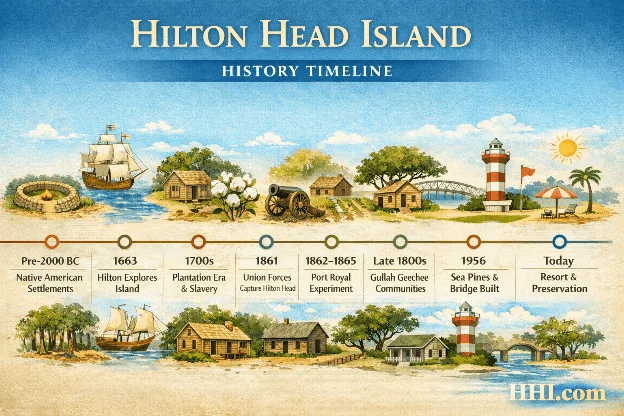
Hilton Head Island history from 4,000-year-old shell rings and Captain William Hilton to the Civil War, Gullah Geechee communities and Sea Pines.
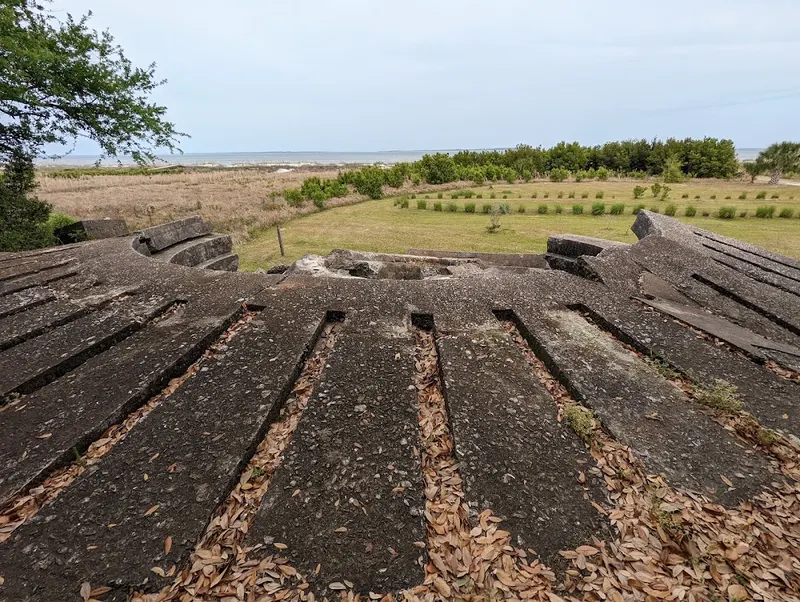
The Hilton Head Steam Gun was a 1901 Army dynamite gun at Port Royal Plantation. What is left, its history and how the public can see it.
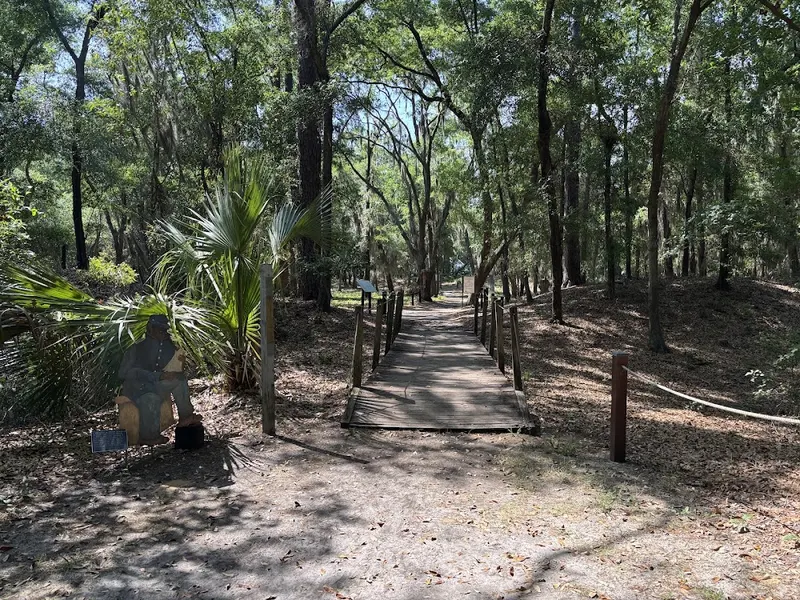
Fort Howell on Hilton Head is a free 1864 Union earthwork built to protect Mitchelville. History, what to see, hours and directions.
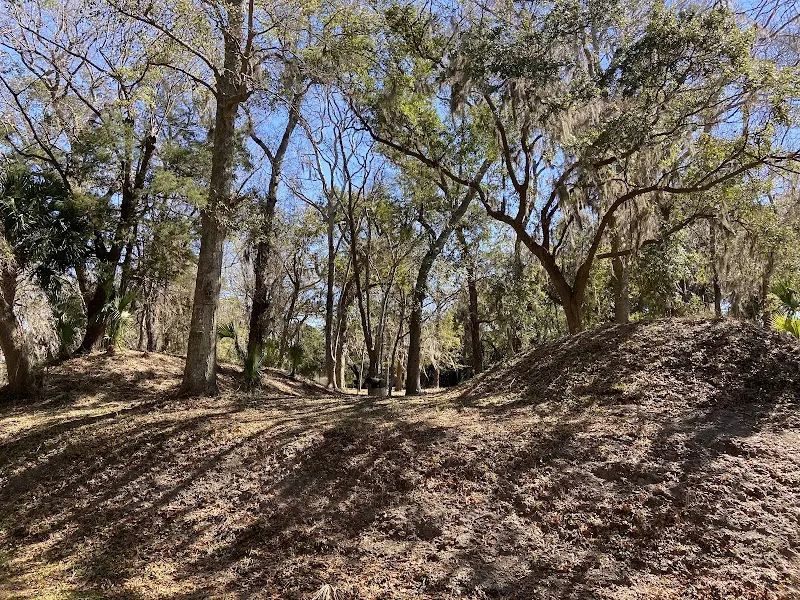
Fort Mitchel is a Civil War earthwork on Skull Creek in Hilton Head Plantation. Its history, why it was built and how to visit by gate pass or tour.
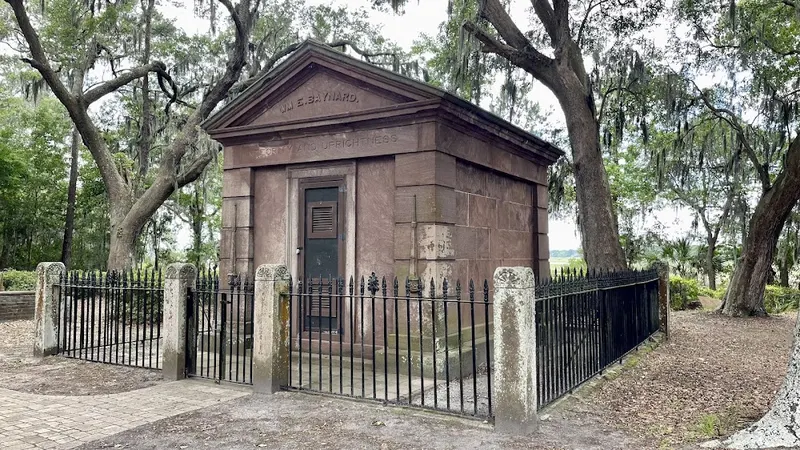
Zion Chapel of Ease on Hilton Head is a free historic cemetery with the 1846 Baynard Mausoleum. Its history, what to see and how to visit.
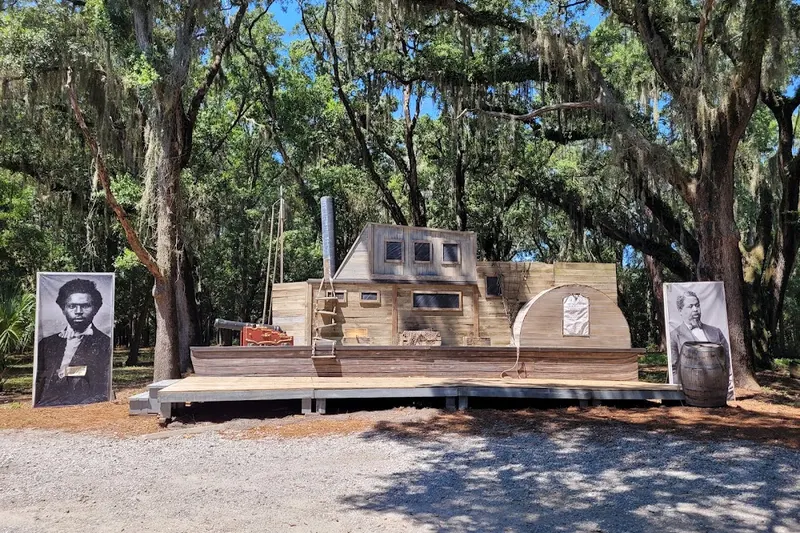
Historic Mitchelville Freedom Park, on the site of the first self-governed town of freed people in the US: free trail, exhibits and guided tours.
Frequently Asked Questions
Can you visit Fort Walker on Hilton Head?
The fort site is inside the gated Port Royal Plantation, so only residents and their guests can go in on their own. The Coastal Discovery Museum’s Forts of Port Royal walking tour takes visitors to Fort Walker and Fort Sherman; registration is online.
What happened at Fort Walker?
It was the Confederate fort that fired the first shot of the Battle of Port Royal on November 7, 1861. The defenders evacuated that afternoon and the Union Navy took the fort, which was renamed Fort Welles the next day.
Who was Fort Walker named for?
Leroy Pope Walker, the Confederate Secretary of War. After the Union took it, General Thomas W. Sherman renamed it Fort Welles for Navy Secretary Gideon Welles.
Where was Fort Walker?
On Coggins Point, at the northeast end of Hilton Head Island, where Port Royal Plantation is today. The road named Fort Walker Drive ends at the Steam Gun and the beach.
Local guides like this come standard for Guests of Partner Properties — one small part of what a Partner Property gives every guest.
Book Partner Properties