
Snakes on Hilton Head Island
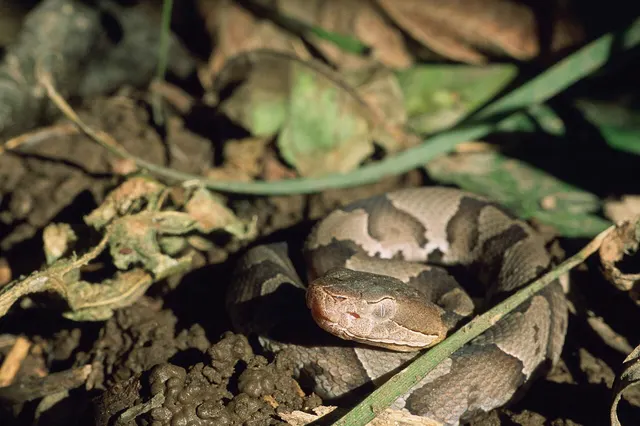
Most are harmless and shy. Which South Carolina snakes are venomous, and what to do if you meet one.
A copperhead, South Carolina’s most numerous venomous snake in the Lowcountry.
Snakes on Hilton Head Island are mostly harmless and mostly out of sight. South Carolina has 38 species of snake, and only six are venomous. The state’s Department of Natural Resources (SCDNR) says all snakes are nonaggressive when left alone. Most visitors never see one, and the ones who do usually see a rat snake or a water snake.
Common Harmless Snakes
The snakes people most often see in South Carolina, according to SCDNR, are black racers, brown snakes, corn snakes, eastern garter snakes, eastern kingsnakes, rough green snakes, non-venomous water snakes and rat snakes. They eat rodents and other pests. Rat snakes climb, and they slip through the Spanish moss in the island’s live oaks.
The Six Venomous Snakes in South Carolina
Copperhead: the most numerous venomous snake in the Lowcountry, according to SCDNR, and the one most likely to turn up near a house.
Eastern diamondback rattlesnake: the largest rattlesnake. It swims, including in salt water, and one was caught crossing a Hilton Head beach.
Cottonmouth (water moccasin): a snake of water and wet ground.
Timber rattlesnake and pigmy rattlesnake.
Eastern coral snake: the one venomous snake that is not a pit viper.
Three of the six have local records we could source: a copperhead bit a woman on a South Forest Beach sidewalk (news reports), an eastern diamondback was caught crossing a Hilton Head beach, and the U.S. Fish and Wildlife Service lists the cottonmouth among the more common snakes at Pinckney Island National Wildlife Refuge, just off the island. Treat any snake you can’t identify as venomous. The other five are pit vipers, with a triangular head and a vertical, cat-like pupil. Many harmless snakes are mistaken for the dangerous ones: a scarlet kingsnake looks like a coral snake, a hognose snake like a rattlesnake, and a harmless water snake like a cottonmouth.
Where You Might See Hilton Head Snakes
Hilton Head island snakes live where there is cover and food: woods, marsh edges, lagoon banks, garden beds and woodpiles. On a trail such as those in the Sea Pines Forest Preserve or on Pinckney Island, stay on the path and watch where you step and put your hands. Snakes are most active in spring and fall, when they are looking for mates.
What to Do if You See a Snake
Stop, step back and give it room to leave on its own. Don’t pick it up, poke it or try to kill it. SCDNR and the Savannah River Ecology Laboratory note that many bites come after the snake has been seen, from handling it or getting too close.
If you are not sure what it is, treat it as venomous and leave it alone.
Wear closed shoes on trails and don’t reach into brush, under logs or into places you can’t see.
If Someone Is Bitten
Call 911 and get the person to a hospital. SCDNR’s snakebite fact sheet says every bite should get medical attention, and it advises against ice packs, which concentrate the venom. Keep the person calm and still, and don’t try to catch the snake. If you can safely take a photo of it, do.
More Nature on Hilton Head
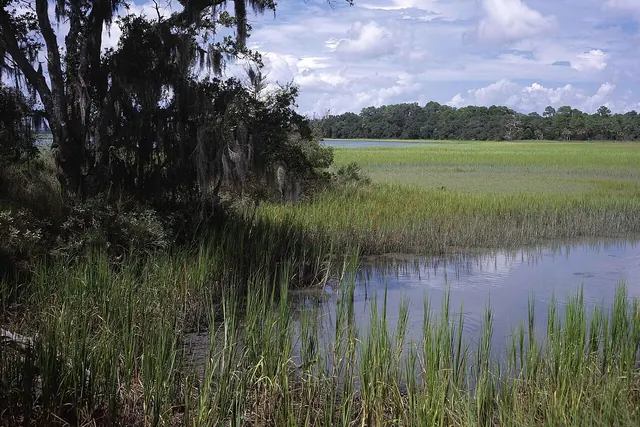
Hilton Head wildlife and nature, answered: dolphins, alligators, birds, Spanish moss, pluff mud and butterflies, and where to see them safely.
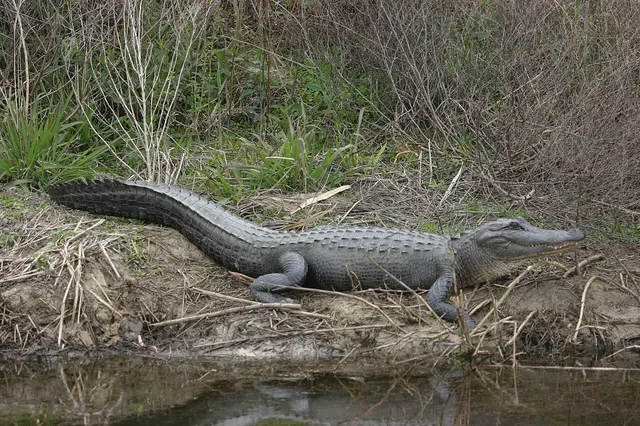
Are there alligators on Hilton Head? Where you see them, how far to stay back, whether they go into saltwater, and who to call about a nuisance alligator.
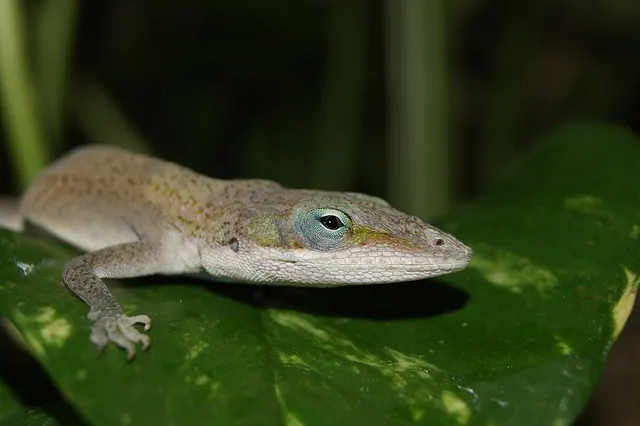
Lizards in South Carolina and on Hilton Head: green and brown anoles, skinks, fence lizards and glass lizards, and how to tell them apart.
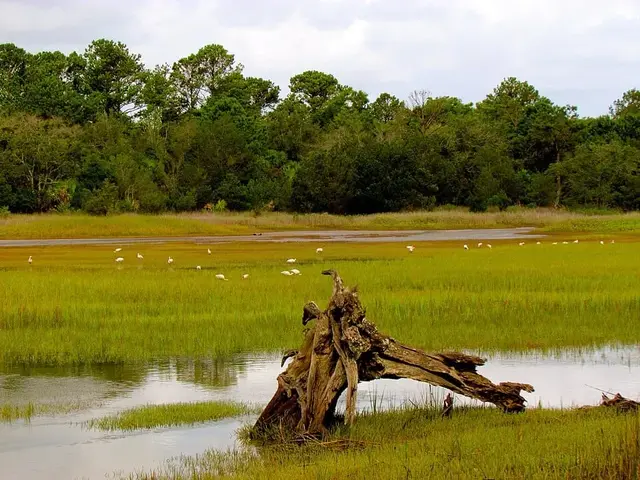
Pinckney Island National Wildlife Refuge: free, open sunrise to sunset, with 14+ miles of trails, wading birds and no dogs allowed. Directions and tips.
Frequently Asked Questions
Are there snakes on Hilton Head Island?
Yes. South Carolina has 38 snake species and most are harmless. They live in woods, marsh edges and gardens, and most visitors never see one.
How many venomous snakes are in South Carolina?
Six: copperhead, eastern diamondback rattlesnake, timber rattlesnake, pigmy rattlesnake, cottonmouth and eastern coral snake.
What is the most common venomous snake in the Lowcountry?
The copperhead, according to SCDNR.
Are the snakes on Hilton Head aggressive?
No. SCDNR says all snakes are nonaggressive when left alone. Bites most often follow handling or getting too close.
What should I do if I see a snake?
Step back and let it leave. If you aren’t sure what it is, treat it as venomous and leave it alone.
What should I do if someone is bitten?
Call 911 and get to a hospital. Every bite needs medical attention. SCDNR advises against ice packs.
Local guides like this come standard for Guests of Partner Properties — one small part of what a Partner Property gives every guest.
Book Partner Properties