
The Yamasee War of 1715 and Hilton Head
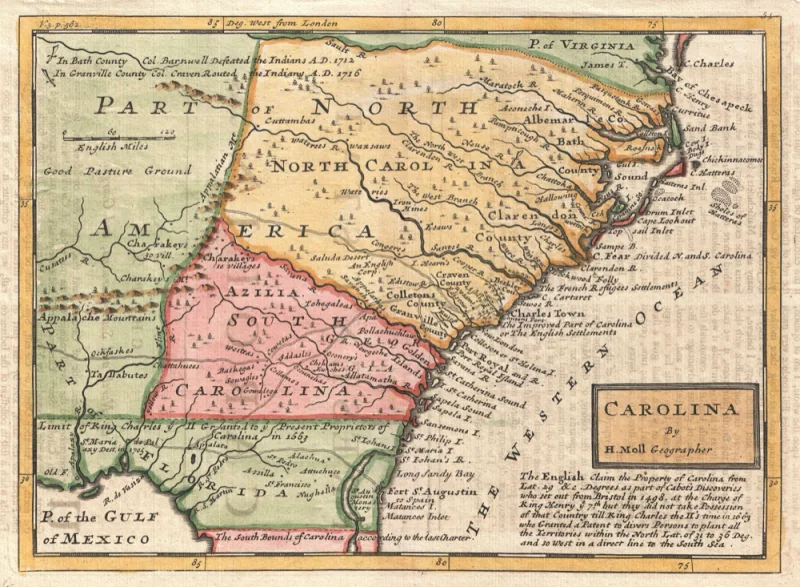
The Yamasee lived on Hilton Head when it was Altamaha Island. Why they went to war in 1715, what happened at Port Royal and Beaufort, and what it opened up for the island.
Who Were the Yamasee?
The Yamasee (also spelled Yamassee or Yemassee) were a Native nation based along the Savannah River, and they were close trading partners of the Carolina colony. In 1683 they began moving into the Port Royal Sound area, and by 1685 Hilton Head and Daufuskie Islands were fully occupied by them. The Lords Proprietors leased Hilton Head to their paramount chief, Altamaha, and for a while the island appeared on maps as Altamaha Island.
The colony valued them as scouts and lookouts and as a buffer against the Spanish in St. Augustine. When Scottish Covenanters founded Stuart’s Town near present-day Beaufort in 1684, they made an alliance with the Yamasee too. A Spanish fleet destroyed that settlement in 1686. By 1695 many Yamasee were moving north and west toward the Ashepoo River, and their main towns lay on the mainland when the war came.
Why the Yamasee War Started
The Yamasee traded deerskins to Carolina merchants for goods, and by the early 1700s hunting had thinned the deer. The Yamasee began raiding Native peoples in Spanish Florida, such as the Apalachee, and selling the captives into slavery to Carolina traders. Traders also pushed credit on them, in the hope of taking land when the bills could not be paid. By 1715 the debt came to at least two years of labor from every adult Yamasee man.
The colony had set up a Board of Indian Commissioners in 1707 to keep trade honest, but it made little difference. White settlers were also moving onto Yamasee land. Debt, the slave trade and the loss of land together made the break.
Good Friday, April 15, 1715
Rumors of an uprising reached Charleston in the spring of 1715. On April 14, colony agents William Bray and Samuel Warner and the Indian agent Thomas Nairne met the Yamasee at Pocotaligo Town to try to calm things. The Yamasee had decided to settle their debts by killing their creditors and attacking the southern settlements on Good Friday, April 15. Bray and Warner were killed at once, and Nairne died after several days of torture.
Other Native nations, among them the Creek, Choctaw, Apalachee, Santee and Waccamaw, killed their own traders. By June about ninety percent of the colony’s Indian traders were dead. The war was never only a Yamasee war: it ran in a wide arc from the Savannah River to Charleston.
The War at Port Royal and Beaufort
The first attacks hit the plantations around Port Royal Sound and killed about a hundred colonists. On Port Royal Island, where Beaufort stands, John Barnwell and the settlers escaped to a merchant ship anchored in the Beaufort River. Some three hundred planter families got away on a ship that had been seized for smuggling, while the Yamasee burned their farms and killed their livestock. The Yamasee destroyed the young town of Beaufort, which had been chartered only four years earlier.
Barnwell, known as “Tuscarora Jack” for his 1711 campaign in North Carolina, then led the Port Royal militia in a counterattack that destroyed the main Yamasee villages south of the Combahee River. The turning point came at the battles of Port Royal and Salkehatchie, where the Yamasee were beaten and driven south of the Savannah River.
How the Yamasee War Ended
The fighting went on for months. In 1716 the colony persuaded the Lower Cherokee to side with it against the Creek, which began a war between those two nations that lasted some forty years. The worst of the Yamasee War was over by April 1716, and South Carolina brought it to a close by 1718. The Yamasee withdrew to Spanish Florida, and their warriors kept raiding the Port Royal area from there until 1728.
The cost was heavy. About four hundred settlers were killed, farmers were driven from half of the colony’s cultivated land, and the damage came to £236,000 sterling, with another £116,000 spent on defense. South Carolina took the Indian trade into its own hands in 1716, replacing private traders with government agents, and it added a company of rangers and scout boats along the southern coast. The Lords Proprietors in London sent little help, and that anger fed the Revolution of 1719, which ended proprietary rule.
What the War Meant for Hilton Head
Land on Hilton Head had already been granted before the war: in 1698 the Lords Proprietors gave nearly all of the island to Landgrave John Bayley of Ireland, about 18,000 acres that became known as Bailey’s Barony. Bayley never lived here. With the Yamasee driven off the coast, English planters took up land on the island. In December 1717, as the war was ending, Colonel John Barnwell was granted 1,500 acres that became Myrtle Bank and Fish Hall Plantations. In 1722 Bayley’s sons hired Alexander Trench of Beaufort to sell the Barony land, and for about twenty years maps called the island Trench’s Island.
The plantation island that followed, with indigo, rice and Sea Island cotton worked by enslaved Africans, is the story told on the history of Hilton Head Island. The Gullah Geechee culture that grew out of it has its own page, Gullah Geechee Culture. For the English captain who gave the island its name half a century before the war, see William Hilton.
More Hilton Head History
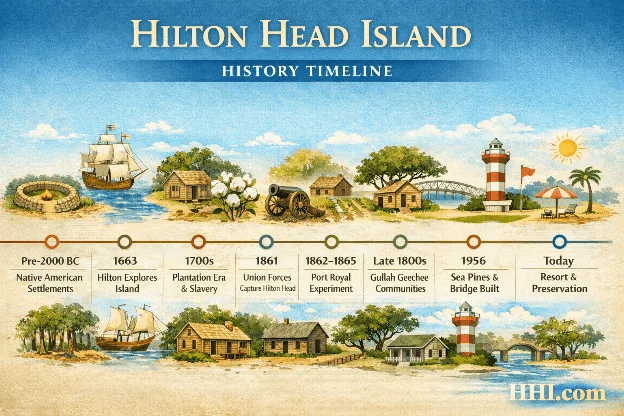
Hilton Head Island history from 4,000-year-old shell rings and Captain William Hilton to the Civil War, Gullah Geechee communities and Sea Pines.
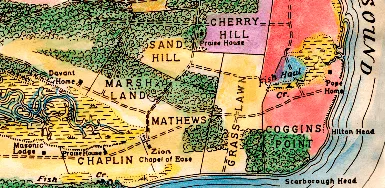
Captain William Hilton sighted the island in 1663. Who he was, why Hilton Head carries his name, and how William Hilton Parkway fits in.
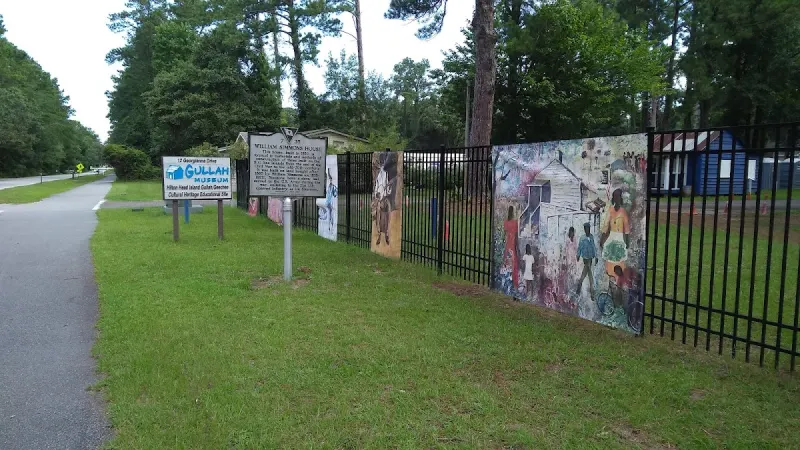
Gullah Geechee culture on Hilton Head: who the Gullah people are, their language and food, the Gullah Museum, Mitchelville, and Gullah heritage tours.
Frequently Asked Questions
What was the Yamasee War?
A war from 1715 to 1718 between the Carolina colony and its trading partners the Yamasee, who were joined by the Creek and other nations. It began at Pocotaligo on April 15, 1715, and reached from the Savannah River to Charleston.
What caused the Yamasee War?
Trade debt, the Indian slave trade and the loss of Yamasee land. Deer had thinned out, traders had loaded the Yamasee with debt, and white settlers were moving onto their land.
Did the Yamasee live on Hilton Head Island?
Yes. They moved into the Port Royal Sound area from 1683, and by 1685 they occupied Hilton Head and Daufuskie. The island was then known as Altamaha Island, after their paramount chief.
How did the Yamasee War affect Beaufort and Port Royal?
The first attacks hit plantations around Port Royal Sound. The settlers on Port Royal Island fled by ship, and the Yamasee destroyed the town of Beaufort. John Barnwell then led the militia in a counterattack.
What happened to the Yamasee after the war?
They were driven south of the Savannah River and withdrew to Spanish Florida, from where their warriors kept raiding the Port Royal area until 1728.
Local guides like this come standard for Guests of Partner Properties — one small part of what a Partner Property gives every guest.
Book Partner Properties