
Black Drum Fishing on Hilton Head
What a black drum is, where and when to catch one around the island, and the South Carolina limits.
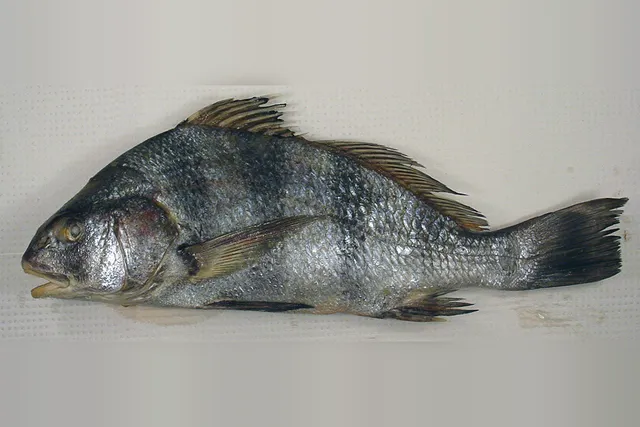
Photo: a black drum (Pogonias cromis). U.S. Food and Drug Administration, public domain.
Black drum are the heavyweights of the creeks around Hilton Head: a thick, humpbacked fish that can run from a couple of pounds to well over fifty, and one that grunts when it is pulled out of the water. Locals catch them off docks, in the marsh creeks and along the sounds most of the year, and the smaller ones are good eating. This is what the fish is, where to find one, and what the state allows you to keep.
What a Black Drum Is
A black drum is a gray to silvery-black fish with a high, arched back, a steep forehead and a row of short whiskers, called barbels, under its chin. It uses the barbels to feel for food in the mud. Young fish carry four or five dark bars down their sides, so they look a lot like the sheepshead they swim with, and the bars fade as the fish grows. It is a cousin of the redfish (red drum), but it has the barbels, a darker body and a blunter shape, and it does not have a redfish’s tail spot.
The name comes from the sound. Muscles beside the swim bladder vibrate against it and make a deep drumming or grunting, loud enough that people on a boat or a dock hear a school beneath them in spring. Black drum eat shellfish, mostly clams, oysters, mussels and crabs, and crush the shells with heavy teeth set in the throat rather than in the jaws. That is the same trick that gives its neighbor, the sheepshead, its famous front teeth.
Where to Catch Black Drum on Hilton Head
Think shellfish. Black drum hold wherever clams, oysters and crabs do: oyster bars and rakes, the mud and sand bottoms of the tidal creeks, and the deeper holes beside docks and bridge pilings. Broad Creek, Skull Creek and the creeks off Calibogue Sound all hold fish, and the bigger ones sit in the deeper channels.
From land, the Charles C. Haigh Jr. Fishing Pier on Pinckney Island fishes deep, moving water and gets its share of drum on a rising tide. The fishing piers guide compares it with the House Creek pier. If you would rather have someone who knows the holes, an inshore trip with a Hilton Head fishing charter is the quickest way to put one on the line, and the captains can tell you which creeks are holding fish that week.
When to Go: Black Drum Season
Black drum are caught in South Carolina all year, so there is no closed season. Spring is the one to plan around. From late winter into April the fish gather to spawn, the big schools show up in the sounds and creeks, and the fishing is at its best. Through summer and fall you will find smaller fish scattered around the docks and oyster beds. In the cold months they slow down and settle into the deeper holes, and a winter day on the creeks will often turn up a few right alongside the sheepshead.
Fish the moving water. A rising tide pushes them up onto the flats and oyster bars to feed, and the slack before the turn is when the bite shuts off. The Hilton Head tide chart has the times.
Bait and Tackle
Fish the bottom with something that smells like a shellfish dinner. Blue crab, cut in halves or quarters, is the classic bait, and fiddler crabs, clams, shrimp and cut fish all work. You can buy bait at the local tackle shops, and our Hilton Head fishing guide lists them.
Rod: medium to medium-heavy spinning or baitcasting gear. A big drum pulls steadily and does not run far, but it will test light tackle.
Rig: a fish-finder or Carolina rig with enough weight to hold the bottom in the current, a short, strong leader, and a 4/0 to 6/0 circle hook.
The bite: a drum often mouths the bait first and then pulls the rod tip down in a slow, heavy bend. Let it take the bait before you tighten up.
Handling: hold the fish with a wet hand or glove, keep it low over the deck, and put a big one back quickly.
South Carolina Size and Bag Limits
The South Carolina Department of Natural Resources (SCDNR) sets the rules. A black drum has to be at least 14 inches and no more than 27 inches long, and you can keep 5 per person per day. That is a slot limit, so any fish over 27 inches goes back, which protects the big breeding fish. Anyone 16 or older needs a South Carolina saltwater fishing license, including on the island’s free public piers. Check the current limits on the SCDNR website before you go, since the state can change them.
Eating Black Drum
The small fish are the ones to eat. Black drum under about five pounds have firm, white, mild, slightly sweet meat that is good fried, grilled, baked or blackened, and the slot fish are in that range. Big drum run coarse and often carry worms in the flesh, which is one more reason to let them go. Ice a keeper right away, and fillet it soon after, because the meat is better fresh than after a day in the cooler.
The scales are large and tough, so a sharp fillet knife and a bit of patience help. If you would rather have the fish cooked for you, our guide to seafood restaurants on Hilton Head is the place to start.
Frequently Asked Questions
What is a black drum?
A large, thick-bodied inshore fish, gray to silvery-black, with a high arched back and short barbels on its chin. Young fish have dark vertical bars that fade as they grow. It is a cousin of the redfish.
Why is it called a drum?
It makes a deep drumming or grunting sound. Muscles beside its swim bladder vibrate against it, and the sound is loud enough to hear from a boat or dock when a school is below.
Where can you catch black drum on Hilton Head?
Around oyster bars, creek bottoms and the deeper holes beside docks and bridge pilings, in Broad Creek, Skull Creek and the creeks off Calibogue Sound. From land, the Charles C. Haigh Jr. Fishing Pier is the best try.
When is black drum season in South Carolina?
They are caught all year with no closed season. Spring is best, when large schools gather to spawn from late winter through April.
What is the black drum limit in South Carolina?
At least 14 inches and no more than 27 inches, 5 per person per day, under SCDNR rules. Anything over 27 inches must be released. Anglers 16 and older need a saltwater fishing license.
What is the best bait for black drum?
Blue crab, cut into pieces, is the classic. Fiddler crabs, clams, shrimp and cut fish also work, fished on the bottom.
Is black drum good to eat?
The small ones are. Fish under about five pounds have firm, mild white meat. Large drum are coarse and often wormy, so most anglers release them.
Local guides like this come standard for Guests of Partner Properties — one small part of what a Partner Property gives every guest.
Book Partner Properties