
The Maritime Forest on Hilton Head Island
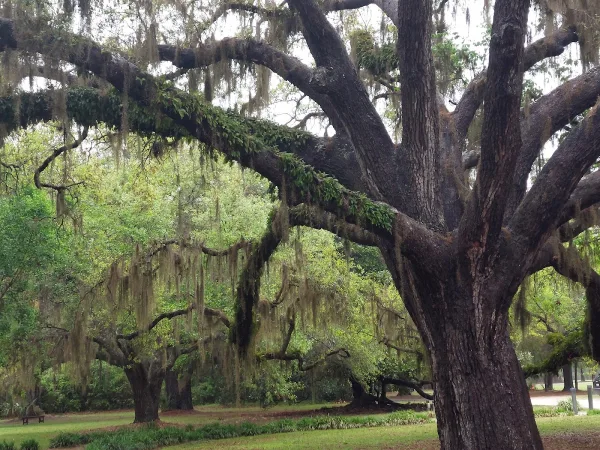
The live oak and palmetto forest behind the dunes: what shapes it, what grows in it, and where to walk through it.
A live oak hung with Spanish moss, the signature tree of the Lowcountry’s maritime forest.
What Is a Maritime Forest?
A maritime forest is the woodland that grows on coastal islands, close enough to the ocean to live with strong winds, flooding and salt spray. On Hilton Head it is the forest of live oaks, palmettos and pines that covers much of the island behind the dunes, and the reason so many roads and fairways here run under a green canopy.
How Salt Spray Shapes the Trees
Wind off the ocean carries salt. It lands on the branches and leaves that face the sea, and they die back, while the sheltered side keeps growing. Over years that gives the forest edge a sheared, sloping look, as if it had been trimmed, rising from low shrubs near the dunes to taller trees inland. Many of the plants have thick, waxy leaves that hold up to the salt.
Trees and Plants to Look For
Live oak: the signature tree, wide and low, often hung with Spanish moss.
Cabbage palmetto: the palm on the South Carolina flag.
Red bay and American holly: evergreen trees in the understory.
Yaupon and wax myrtle: dense evergreen shrubs, common at the forest edge.
Saw palmetto: the low, fan-leaved palm that carpets the forest floor.
Why the Maritime Forest Matters
The forest helps shelter the island from storms, holds nutrients and fresh groundwater, and is home to mammals and reptiles, from deer to snakes. Thousands of migrating birds stop in maritime forests each year, which is part of why birding on Hilton Head is so good in spring and fall.
Where to Walk in a Maritime Forest
These places have trails or boardwalks under the canopy. The Audubon preserve shows the island’s inland forest: pine flatwoods and wetland rather than oaks by the sea.
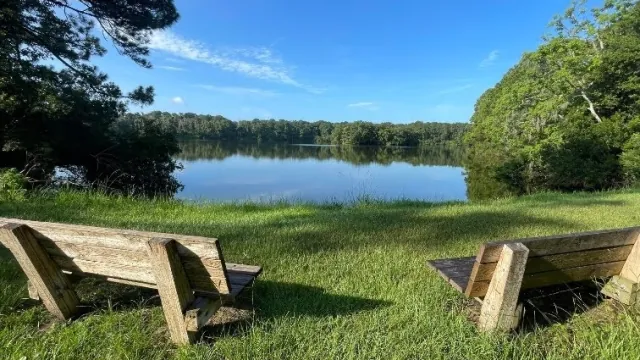
Sea Pines Forest Preserve on Hilton Head: 605 acres, trails, the Shell Ring, Fish Island, alligator tours, hours, parking, and the gate fee.
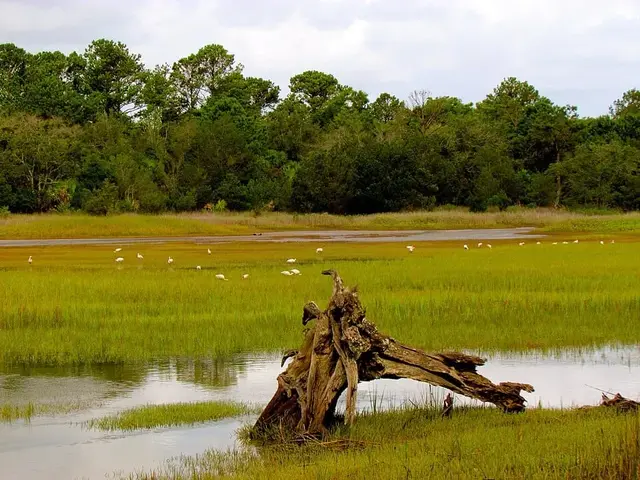
Pinckney Island National Wildlife Refuge: free, open sunrise to sunset, with 14+ miles of trails, wading birds and no dogs allowed. Directions and tips.
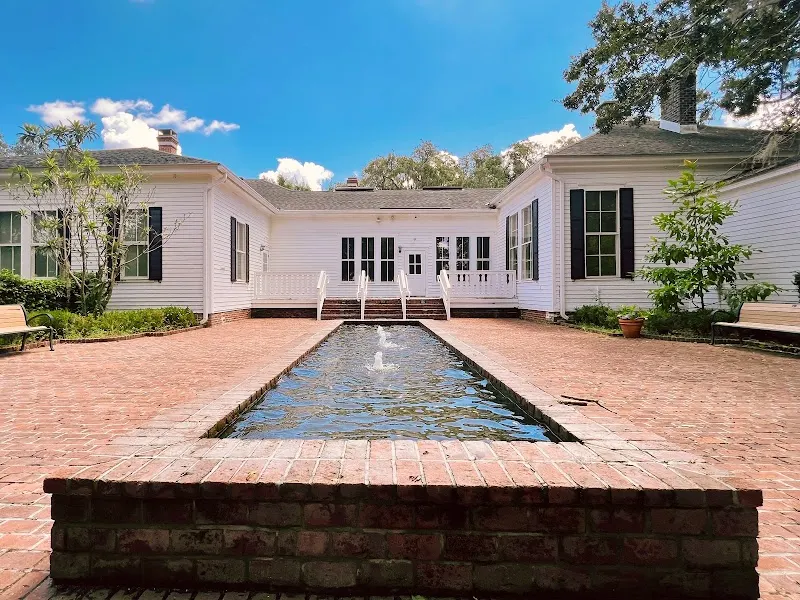
The Coastal Discovery Museum at Honey Horn: free admission, hours, tours and cruises, the farmers market and how to visit this Smithsonian Affiliate.
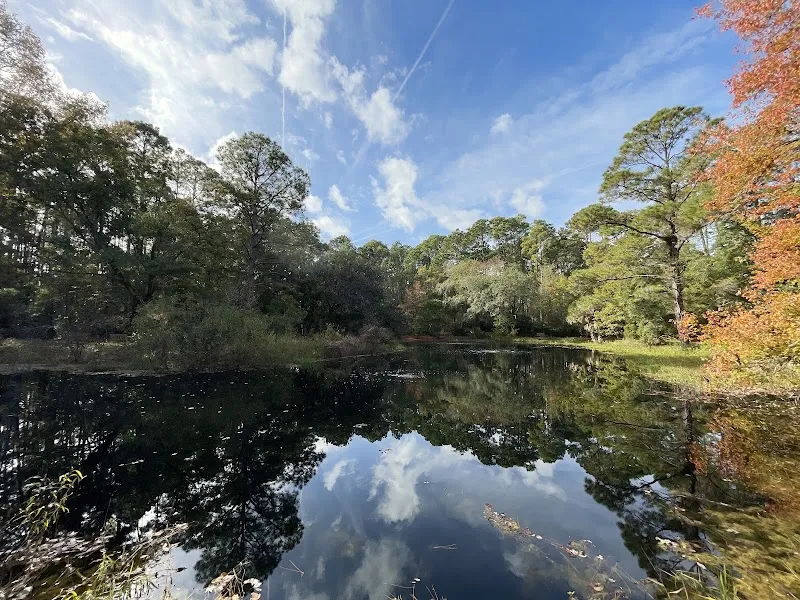
A free 50-acre nature preserve off Palmetto Bay Road with short, flat trails, a pond and birding. Hours, directions and what you will see.
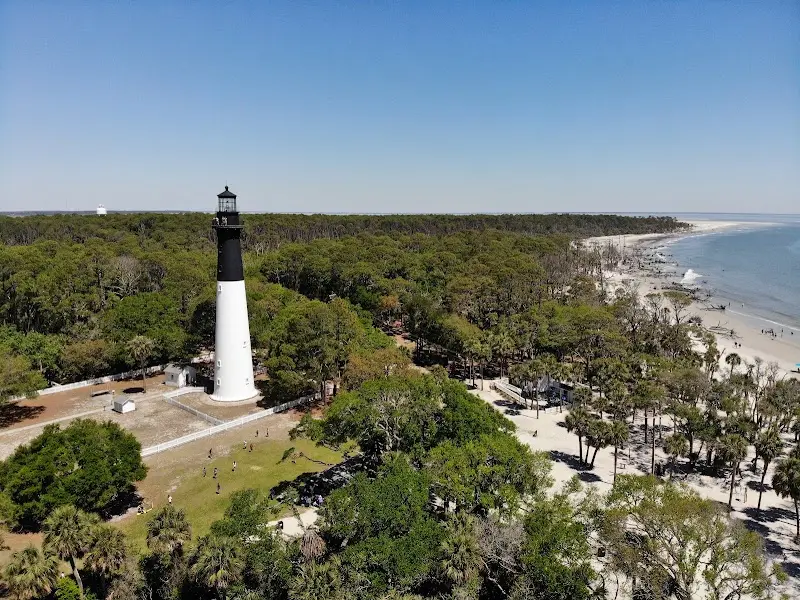
Hunting Island State Park is about 70 minutes from Hilton Head: climb SC's only public lighthouse, walk Boneyard Beach, camp, plus hours and admission.
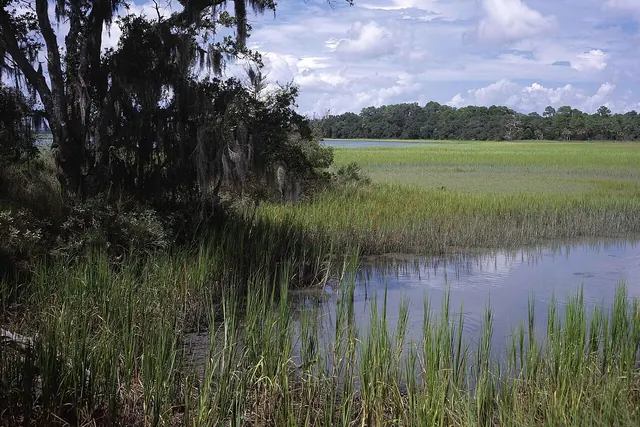
Hilton Head wildlife and nature, answered: dolphins, alligators, birds, Spanish moss, pluff mud and butterflies, and where to see them safely.
Frequently Asked Questions
What is a maritime forest?
A forest that grows on coastal islands, close enough to the ocean to withstand strong winds, periodic flooding and salt spray. In South Carolina it is mostly live oak, cabbage palmetto, red bay, holly, yaupon, wax myrtle and saw palmetto.
Why do maritime forest trees lean or look trimmed?
Salt carried on the sea wind kills the leaves and branches facing the ocean, while the sheltered side keeps growing, so the canopy slopes away from the water.
Where can I see a maritime forest on Hilton Head?
Sea Pines Forest Preserve, Pinckney Island National Wildlife Refuge just off the island, and the grounds of the Coastal Discovery Museum at Honey Horn all have trails through it.
Why are maritime forests important?
They help protect coastal islands from storms, conserve nutrients and groundwater, and shelter mammals, reptiles and thousands of migrating birds.
Local guides like this come standard for Guests of Partner Properties — one small part of what a Partner Property gives every guest.
Book Partner Properties