
Cold-Stunned Sea Turtles on Hilton Head
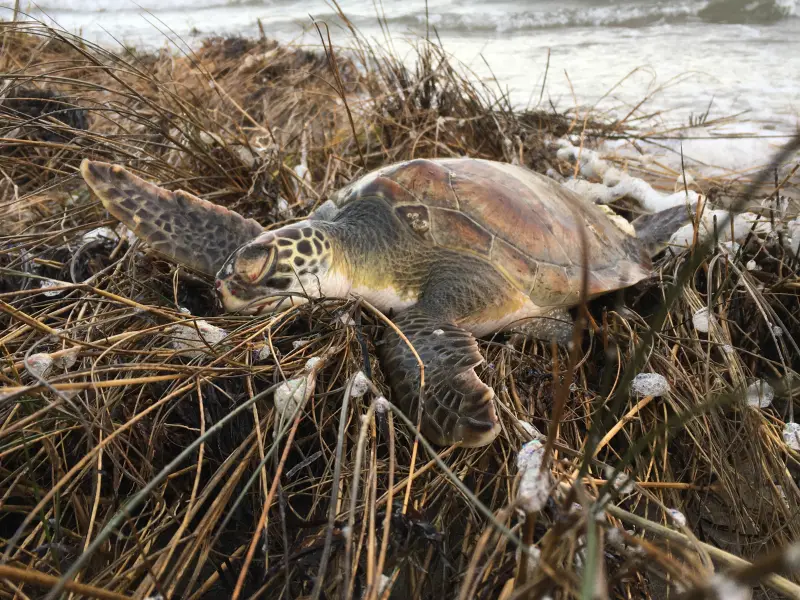
When a winter freeze chills the water, young sea turtles go limp and wash ashore. Here is what to do if you find one.
A cold-stunned sea turtle on the North Carolina coast (National Park Service photo).
- What it is
- a sea turtle chilled until it can barely move
- When
- winter cold snaps
- Water temperature
- below about 50°F
- Turtle in trouble
- SCDNR, 1-800-922-5431
Cold stunning is what happens to a sea turtle caught in water that turns cold too fast. On Hilton Head it is a winter event: a hard freeze chills the shallow creeks and sounds, and a young turtle that has not moved to warmer water goes limp, floats, and drifts ashore. It looks dead. Often it is not, and a phone call can save it.
What Is Cold Stunning?
Sea turtles cannot make their own body heat the way birds and mammals do, so their bodies run at about the temperature of the water around them. When the water drops below about 50°F, a turtle slows down: its heart, its circulation and its digestion all ease off until it is too weak to swim or dive. It floats at the surface, and the wind and the current push it onto a beach, a marsh bank or a dock.
A turtle left in the cold that way can develop pneumonia and frostbite, and it can die. Found in time and warmed slowly, it can recover and go back to the sea.
Cold-Stunned Turtles on Hilton Head
The turtles found stunned on Hilton Head in recent winters have been young green sea turtles. Kemp’s ridleys are the other species most often stunned along the Atlantic coast. The risk is highest in shallow water, which cools quickly and gives a turtle nowhere deeper to go, so the island’s cases have turned up in places like Broad Creek as well as on the ocean beach.
January 2025: the patrol found the season’s first cold-stunned turtle, a young green, near the Cross Island boat ramp on Broad Creek on January 7. By late January, three turtles and a manatee had washed up on the island.
December 2025: with a freeze in the forecast, SCDNR asked people on the coast to watch for stranded turtles and manatees.
January 2026: a beach walker found a young green turtle on Hilton Head on January 26. It reached the South Carolina Aquarium with a body temperature of about 46°F, against a healthy 70 to 75°F.
A short cold snap followed by a warm-up usually brings only a turtle or two. A long run of cold weather is what brings more. The ocean off the island averages in the low 50s in January, so it takes a real freeze to push the shallow water past the danger line. See Hilton Head weather in January and the water temperature by month.
If You Find a Cold-Stunned Sea Turtle
Call the SCDNR 24-hour wildlife hotline on 1-800-922-5431. The state sends the island’s turtle patrol, the volunteers of Sea Turtle Patrol HHI, who answer stranding calls and get the turtle to care.
Don’t put it back in the water. A stunned turtle can’t swim and will drown or strand again.
Don’t try to warm it. Heating a turtle quickly can send it into shock and kill it.
Keep your distance. Stay nearby so you can point the responders to it, but don’t handle it; it is illegal without a permit.
Say exactly where it is: the nearest beach access, dock or boat ramp, whether it is moving, and roughly how big it is.
Assume it is alive. A cold-stunned turtle can lie still for hours and still recover.
What Happens to a Rescued Turtle
Stunned turtles from Hilton Head have gone to the Sea Turtle Care Center at the South Carolina Aquarium in Charleston. There they are warmed a little each day, about 10 degrees a day for the January 2026 turtle, because warming too fast can kill them. As a turtle warms, health problems the cold was hiding can surface, and the vets treat those too. A turtle that recovers is released once the water is warm enough, sometimes after a drive south to warmer water. Recovery can take a few weeks or several months.
Winter strandings are the off-season side of the turtle work on Hilton Head. For the summer side, nesting, hatching and the lights-out rule, see Hilton Head sea turtles.
More Beach Wildlife
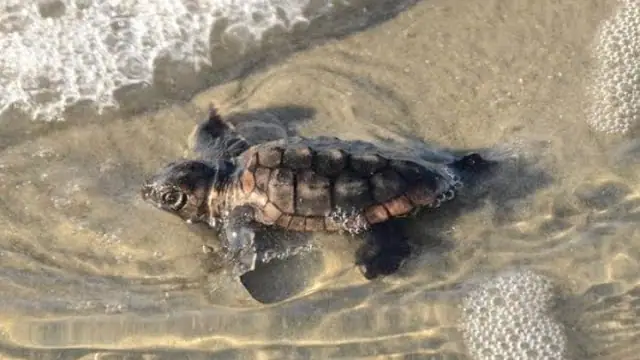
When do sea turtles hatch on Hilton Head? Nesting and hatching months, nests by year, Sea Turtle Patrol HHI and the lights-out rule for beach homes.
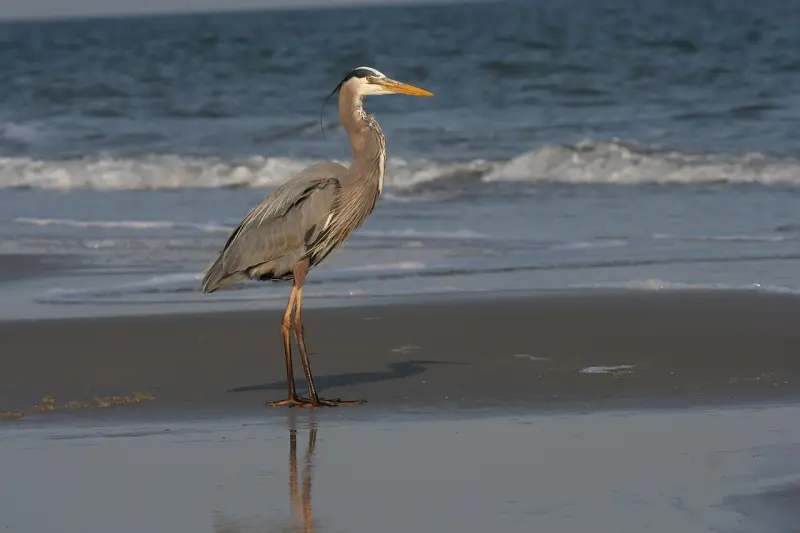
Hilton Head in winter: highs near 60, quiet beaches and the lowest rates of the year. Weather by month, things to do, winter events and long winter stays.
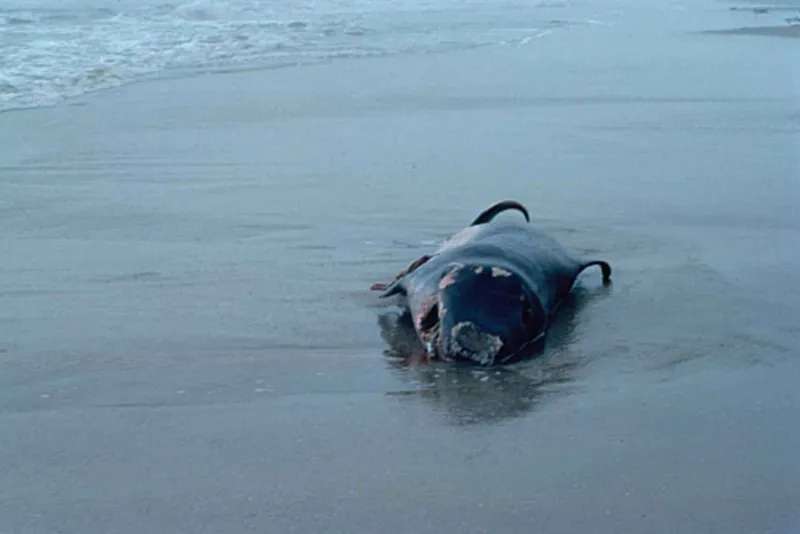
The sperm whale that beached on Hilton Head in May 2025, earlier strandings on the island, and who to call if you find a whale or dolphin on the sand.
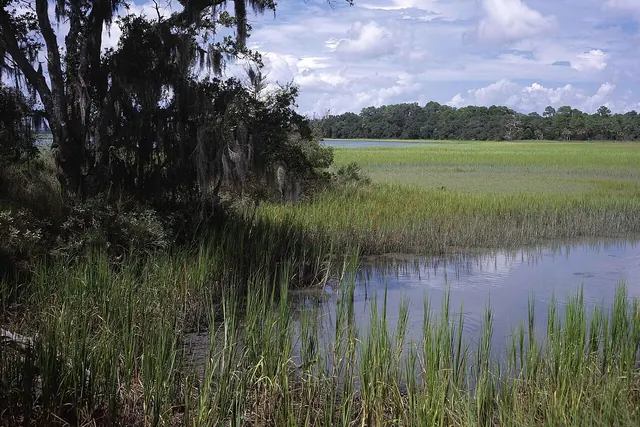
Hilton Head wildlife and nature, answered: dolphins, alligators, birds, Spanish moss, pluff mud and butterflies, and where to see them safely.
Frequently Asked Questions
What is cold stunning?
A condition in which a sea turtle becomes weak and inactive after the water around it turns cold, usually below about 50°F. It stops swimming, floats at the surface and washes ashore.
Does cold stunning happen on Hilton Head?
Yes, in winter cold snaps. Young green sea turtles have been found stunned on the beach and in Broad Creek, three of them in January 2025 and another in January 2026.
What should I do if I find a cold-stunned sea turtle?
Call the SCDNR 24-hour hotline on 1-800-922-5431 and say exactly where it is. Don’t put it back in the water, don’t try to warm it, and keep your distance until help arrives.
Is a cold-stunned turtle dead?
Often not. A stunned turtle can lie still and seem lifeless for hours and still recover with care, so report every turtle you find.
Why shouldn’t I warm a cold-stunned turtle?
Warming a turtle quickly can send it into shock and kill it. Rehab staff raise its temperature a little each day, over several days.
Where do cold-stunned turtles from Hilton Head go?
To the Sea Turtle Care Center at the South Carolina Aquarium in Charleston, where they are warmed slowly, treated and released once the water is warm enough.
Local guides like this come standard for Guests of Partner Properties — one small part of what a Partner Property gives every guest.
Book Partner Properties