
Sea Pork on Hilton Head Island Beaches
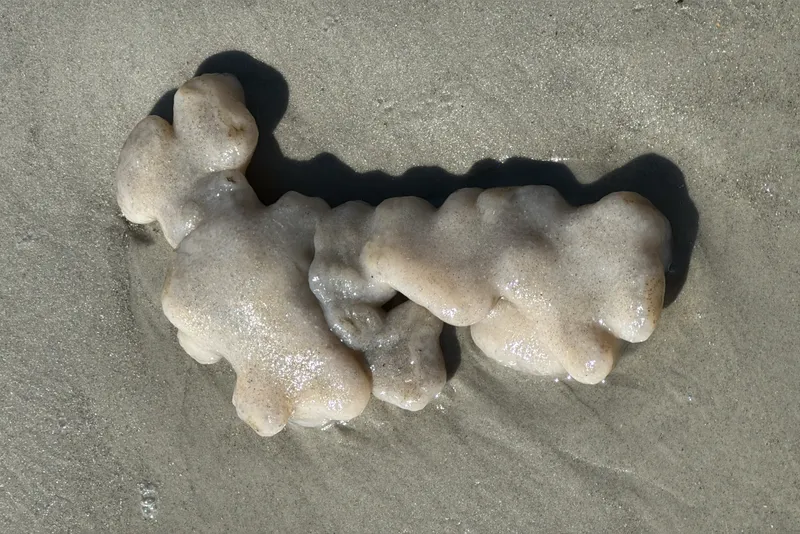
Those pale, rubbery lumps on the tide line are a colony of sea squirts, not a jellyfish, and you can touch them.
After a blow, the tide line on Hilton Head can be dotted with firm, lumpy slabs the color of cream or tan. They look like something out of a butcher’s case, and they are what most people on the beach mistake for a jellyfish at first glance. They aren’t one. This is a quick guide to what they are, why the surf delivers them, and what to do when you find one.
What Is Sea Pork?
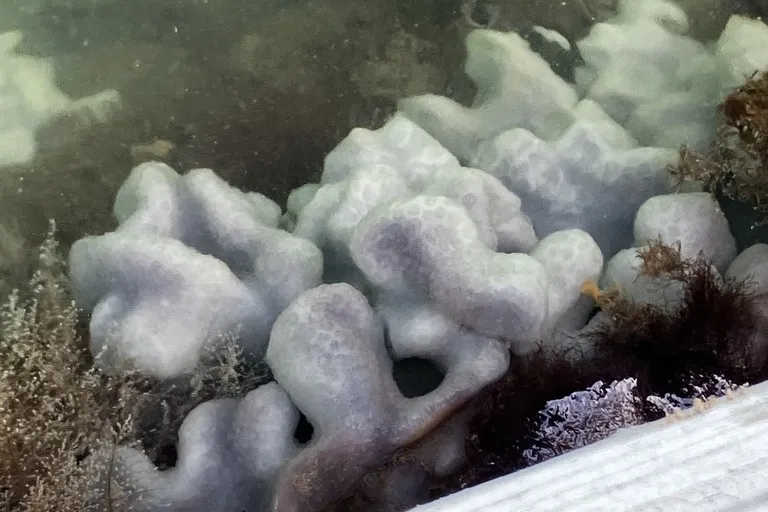
Sea pork is a colonial tunicate, also called a sea squirt, and its scientific name is Aplidium stellatum. Each lump is a colony of hundreds, sometimes millions, of tiny animals called zooids living together inside one tough, rubbery coat. Look closely and the surface is dotted with pores: each is a doorway for one zooid, which pulls in seawater, strains out food and pushes the water back out. As one Coastal Discovery Museum naturalist put it, it is a whole colony of animals working as one.
Alive, a colony can be pink, green, red, lavender or nearly black, and it can grow up to about a foot long. The photo here shows live colonies under a dock in St. Augustine, Florida; the kind that grows around Hilton Head clings to the same sort of hard surfaces, such as pilings, groins, jetties and rocks, from the low-tide line down to about 30 feet. Once a colony has died and dried in the sun, the color fades to a pale, fatty-looking cream, which is where the name comes from: it resembles salt pork or fatback.
A sea squirt is a stranger relative than it looks. The larva swims like a tadpole with a simple rod down its back, the start of a backbone, which puts tunicates in the same large group as fish, birds and people. They are closer kin to us than to the jellyfish they get confused with.
Why Does Sea Pork Wash Up on Hilton Head?
Sea pork is anchored to hard surfaces offshore and in the sound, and it stays put until something tears it free. Storms, strong currents and heavy surf rip colonies off their pilings, jetties and rocks, and the tide carries them in. Tunicates on Georgia’s Tybee Island have been blamed on strong winds and hurricanes, and the same thing happens up and down the Carolina coast, including Hunting Island in Beaufort County. The piece in the photo at the top of this page was found on Hilton Head Island in late September 2025.
That also tells you how long a piece has been on the sand. By the time you find one the colony has died, so it is not something that is suffering on the beach and it doesn’t need rescuing. The pieces turn up after rough weather rather than at a set time of year, so after a storm is the day to look.
Is Sea Pork Safe to Touch?
Yes. Sea pork has no stinging cells. A shell museum scientist asked about it by a South Carolina news site said people shouldn’t worry about touching it, though it is gooey and not pleasant, and it won’t sting. Rinse your hands afterward, and keep it away from your face.
Don’t eat it. The same experts advise against it because of possible toxins, whatever you may read about tunicates on a menu in another country.
Sea Pork or Jellyfish?
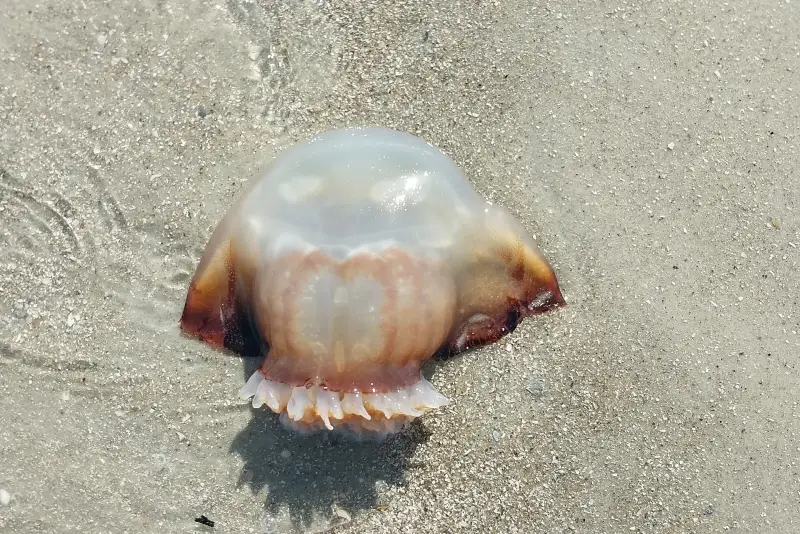
The jellyfish you will actually see washed up here is the cannonball jelly, and it looks nothing like sea pork up close. A cannonball jelly is a smooth, firm dome, milky white with a brown or purplish band around the rim, and rarely more than eight to ten inches across. Sea pork is lumpy and irregular, with no rim and no band, and a surface covered in tiny pores.
Shape: a cannonball jelly is a round dome with a feeding stalk underneath; sea pork is an irregular lump or slab.
Color: a cannonball jelly is white with a brown band; sea pork is cream, tan or gray once it has dried, and it can be pink or lavender if the colony is fresh.
Surface: a cannonball jelly is smooth; sea pork has a pattern of tiny pores.
Stings: neither is known to sting a swimmer. Sea nettles, the stingers on this coast, look entirely different, with long thin tentacles in the water.
The jellyfish and stingrays page covers the ones that do sting, when they are in and what to put on a sting.
More Beach Wildlife
Hilton Head jellyfish: when sea nettles and cannonball jellies show up, which ones sting, what to do for a sting, and stingray safety.
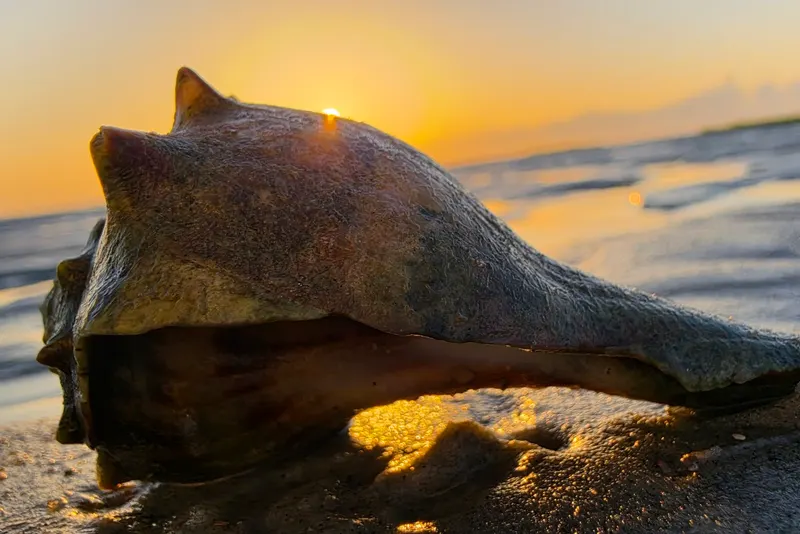
Hilton Head shelling: the best beaches for shells and shark teeth, the tides to plan around, what you can keep, and how to reach the Vanishing Island.
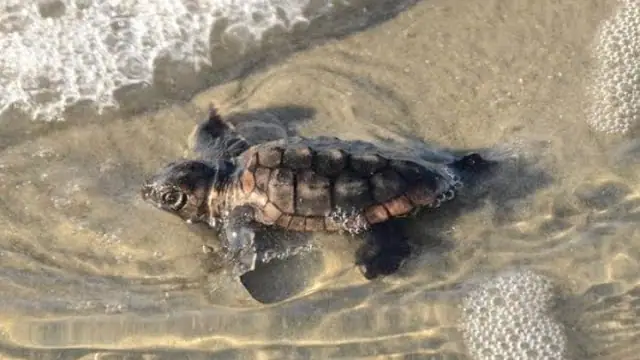
When do sea turtles hatch on Hilton Head? Nesting and hatching months, nests by year, Sea Turtle Patrol HHI and the lights-out rule for beach homes.
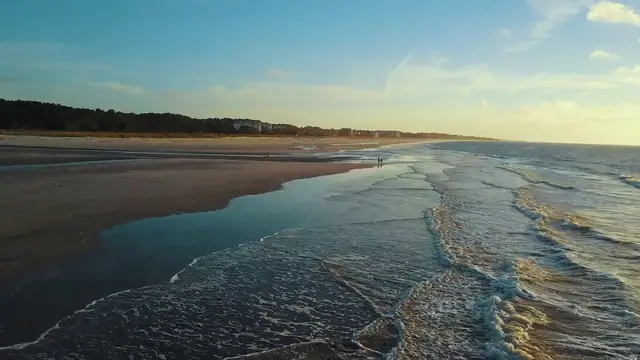
Every named beach on Hilton Head Island — Coligny, Driessen, Folly Field, Burke's, and more — with parking, amenities, and which one is right for your trip.
Frequently Asked Questions
What is sea pork?
A colony of tiny filter-feeding animals called tunicates, or sea squirts, living together in one rubbery coat. It grows on pilings, jetties and rocks, and storms tear pieces loose and wash them up as pale, lumpy slabs that look like salt pork. It isn’t a jellyfish and it doesn’t sting.
Is sea pork a jellyfish?
No. A jellyfish is a soft, free-swimming dome; sea pork is a colony of sea squirts that stays fixed to hard surfaces until a storm pulls it loose. Sea squirts are actually closer relatives of people than of jellyfish.
Is sea pork safe to touch?
Yes. It has no stinging cells, so it won’t sting. It is slimy, so wash your hands afterward.
Why does sea pork wash up on the beach?
Storms, strong currents and heavy surf tear colonies off the pilings, jetties and rocks they grow on, and the tide delivers them to the beach. The colony is already dead when it lands.
Can you eat sea pork?
No. Experts advise against eating it because of possible toxins.
Local guides like this come standard for Guests of Partner Properties — one small part of what a Partner Property gives every guest.
Book Partner Properties