
Hilton Head Sea Turtles: Nesting and Hatching Season
Watch: Sea Turtle Hatching Secrets
Loggerheads nest on Hilton Head from May into August, and each nest hatches about two months later, from mid-July into October.
- Nesting: May through August
- Hatching: mid-July into October
- Incubation: about 55 to 60 days
- Lights out: 10 p.m. to 6 a.m., May 1 to October 31
- Turtle in trouble: SCDNR, 1-800-922-5431
Every summer, loggerhead sea turtles come ashore on Hilton Head at night to bury their eggs in the dry sand, and two months later the hatchlings dig their way out and run for the surf. You are far more likely to see the signs than the turtles: wide flipper tracks in the morning, and nests marked off with poles and tape. Here is when it happens, who looks after the nests, and the rules that apply to everyone on the beach, and to every beachfront home, from May through October.
When Do Sea Turtles Hatch on Hilton Head?
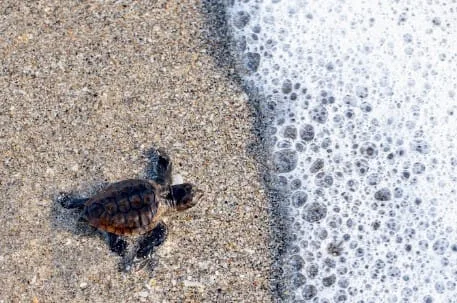
A nest hatches about 55 to 60 days after it is laid. On Hilton Head the average has run between 53 and 59 days in recent seasons, shorter in a hot summer and longer in a cool one. With the first nests laid in early May, the first hatchlings usually appear around the middle of July, and the last of the late-summer nests hatch in October.
The hatching itself is slow. The eggs crack open underground, and it takes the hatchlings about three days to climb up through a foot or so of sand. They wait for the sand to cool and come out after sunset, often all at once, then head for the brightest horizon, which on a dark beach is moonlight on the water. That is why a porch light or a flashlight can send a whole nest the wrong way. Once they reach the water they swim for about three days to reach the Gulf Stream, some 70 miles out.
When Do Sea Turtles Lay Eggs on Hilton Head?
From May through August, at night. A female loggerhead, a few hundred pounds of turtle, hauls herself above the high-tide line, digs a chamber about two feet deep with her back flippers and lays a clutch of around 115 eggs, the average for Hilton Head’s nests. She covers it, flings sand to hide it, and goes back to sea. She will come back to lay several more nests that summer, about two weeks apart, and then usually skip two years before nesting again.
The turtles nesting here are about 30 years old or more, and they come back to the stretch of coast where they hatched; to a loggerhead, Georgia and the Carolinas count as one home beach. The temperature of the sand decides whether each hatchling is male or female, with warmer nests producing more females. Not every visit ends in a nest. A turtle that crawls up and turns back without laying leaves a “false crawl”, and Hilton Head logs hundreds a season. Beach chairs, holes and bright lights are among the things that turn them around.
When Is Hatching Season for Turtles on Hilton Head?
Hatching season runs from about mid-July into October, with August and September the busiest months. Nesting season, and the Town’s lighting rule, runs from May 1 to October 31. Month by month, it goes like this:
| Month | On the beach |
|---|---|
| May | The patrol starts its dawn walks on May 1. The first nests usually turn up in the first half of the month. |
| June | Nesting picks up. Most mornings bring new tracks and new staked nests. |
| July | Nesting continues, and the first nests hatch from about the middle of the month. |
| August | The last nests are laid. Hatching is in full swing, mostly after dark. |
| September | Hatching continues and the patrol digs up hatched nests to count the eggs. |
| October | The last late nests hatch. The lighting rule runs through October 31. |
Sea Turtle Patrol HHI
Every nest on the island is found and looked after by Sea Turtle Patrol Hilton Head Island, a volunteer nonprofit known as Sea Turtle Patrol HHI. It is the only group the South Carolina Department of Natural Resources permits to monitor nesting on Hilton Head’s 14 miles of beach, and it works under the state permit held by its director, Amber Kuehn.
Dawn patrol: from May 1 to the end of hatching season, the patrol is on the beach from 5 a.m., following each set of tracks to its nest.
Marking and moving nests: each nest is staked with poles and tape and logged by GPS. About half are moved by hand to higher sand, away from the highest tides. In 2026 the patrol moved 284 of 414.
Counting: three days after a nest hatches, the patrol opens it and counts the hatched and unhatched eggs. Any hatchlings still inside are released to the sea.
Strandings: the patrol also answers calls about sick, injured and dead turtles. It handled 24 in 2025.
You can’t sign up to volunteer for a week: patrol members train for months under SCDNR rules. You can support the patrol with a donation or a nest dedication, which comes with a certificate carrying the nest’s number and updates on it through the season. Holiday dedications for the next season open on November 1. Guests at the island’s Sea Turtle Friendly Certified resorts can also ride along on a morning patrol, the Sea Turtle Patrol Experience, on Thursdays and Sundays from June through August, for a donation; it starts at 5:30 a.m., takes up to three people and is for ages 10 and up.
Lights Out for Sea Turtles: The Rule for Beachfront Homes
Hilton Head’s Sea Turtle Protection Ordinance applies from May 1 to October 31 to every building that can be seen from the beach: houses, villas, condos and hotels, and the vacation rentals among them.
Outside lights off at 10 p.m. Porch, deck, pool and landscape lights that are visible from the beach go off until 6 a.m. Lights that stay on should be amber, shielded and pointed down.
Inside lights shaded at 10 p.m. Close blinds or drapes, or switch off any room lights that can be seen from the beach or shine onto it.
No white flashlights on the beach. Use a red light for a night walk, never point any light at a turtle or a nest, and leave phone flashes off.
Reporting: a light left on can be reported to the Town’s Community Code Enforcement team on (843) 341-4600.
If you are staying in an oceanfront rental, the rule is yours to follow while you are there, so check the porch and deck lights before bed. Patrol members sometimes have to put a screen around a nest in front of a lit house so the hatchlings don’t crawl toward it.
Put the Beach to Bed
A safe nesting beach is clean, dark and flat. Before you leave each day, fill in any holes (the Town limits them to 12 inches deep), knock down sandcastles, and take everything home: chairs, umbrellas, tents and toys left out overnight stop nesting females and trap hatchlings. Our sandcastle guide has the full digging rules.
In June, July and August the Sea Turtle Patrol runs a free “Put the Beach to Bed” hour from 7 to 8 p.m., when volunteers and visitors pick up litter and smooth the sand together. It meets on Sundays at the Dunes House in Palmetto Dunes, on Tuesdays at the Sonesta and on Wednesdays at the Beach House. Any age can join, supplies are provided, it goes ahead rain or shine, and there is nothing to register for.
Hilton Head Sea Turtle Nests by Year
Hilton Head averages about 250 nests a season, but the number swings a lot from year to year, because each female nests only every two or three years. The counts below are from the state’s nest database, which the patrol reports into.
| Season | Nests | Hatchlings out of the nest |
|---|---|---|
| 2026 second-biggest season on record | 414 | 33,000+ |
| 2025 | 237 | 16,537 |
| 2024 | 204 | 14,119 |
| 2023 | 353 | 28,447 |
| 2022 | 423 | 36,314 |
| 2021 | 283 | 22,107 |
| 2020 | 291 | 23,749 |
| 2019 the record | 463 | 33,687 |
| 2018 | 179 | 9,177 |
| 2017 | 325 | 18,419 |
| 2016 | 411 | 26,743 |
Where to See Sea Turtles in Hilton Head
Honestly, you probably won’t see one, and that is how it should be. Nesting happens late at night, hatchlings come out after dark at a time no one can predict, and the patrol keeps nest locations to itself. What you will see on almost any summer beach walk are the nests themselves: squares of sand fenced off with stakes and bright tape, often with a sign. Early in the morning you may also find fresh tracks, two lines of flipper marks like a small tractor’s, running from the water to the dunes and back. There is no need to call anyone about them; the patrol is already on its way.
If you do come across a nesting turtle or hatchlings, keep well back, stay low and dark, and let them be. No flash, no flashlight, no help toward the water: hatchlings need the crawl to get their bearings. The patrol’s morning ride-along above is the one way to go out with the people who see turtles every day.
Ghost Crabs on Hilton Head Beaches
The pale, quick crabs that sprint across the sand at dusk and dive into holes near the dunes are ghost crabs. They are colored to match the sand and spend the day in burrows on the upper beach, coming out at night to scavenge. They are also one of the hazards a nest faces, since they dig into nests and pick off hatchlings on the way to the water, which is one more reason the patrol watches its nests closely.
If You Find a Sea Turtle in Trouble
For a sick, injured, tangled or dead sea turtle, call SCDNR’s 24-hour hotline on 1-800-922-5431. Don’t touch it or try to put it back in the water. Be ready to say exactly where it is (the nearest beach access or beach marker), whether it is alive, roughly how big it is, and whether it has spray paint on its shell, which means it has already been recorded. If it is alive, stay nearby until help arrives. For other wildlife you may meet in the water, see our guides to jellyfish and stingrays and sharks off Hilton Head.
More Beach Wildlife
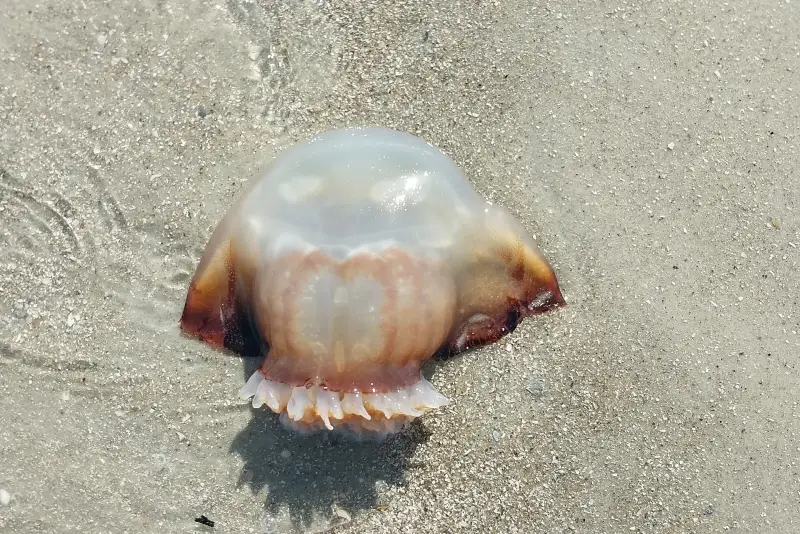
Hilton Head jellyfish: when sea nettles and cannonball jellies show up, which ones sting, what to do for a sting, what sea pork is, and stingray safety.
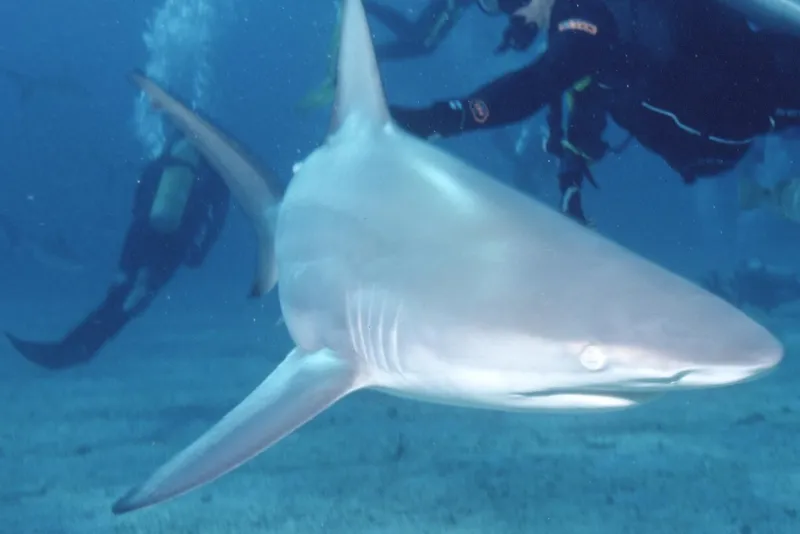
Sharks off Hilton Head: the species in the surf, when they are around, the bites reported at Sea Pines and Coligny, and how to lower the odds.
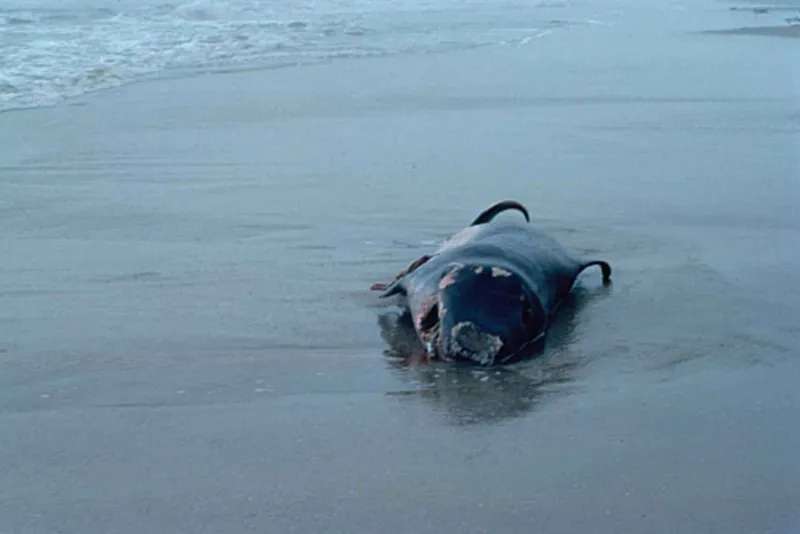
The sperm whale that beached on Hilton Head in May 2025, earlier strandings on the island, and who to call if you find a whale or dolphin on the sand.
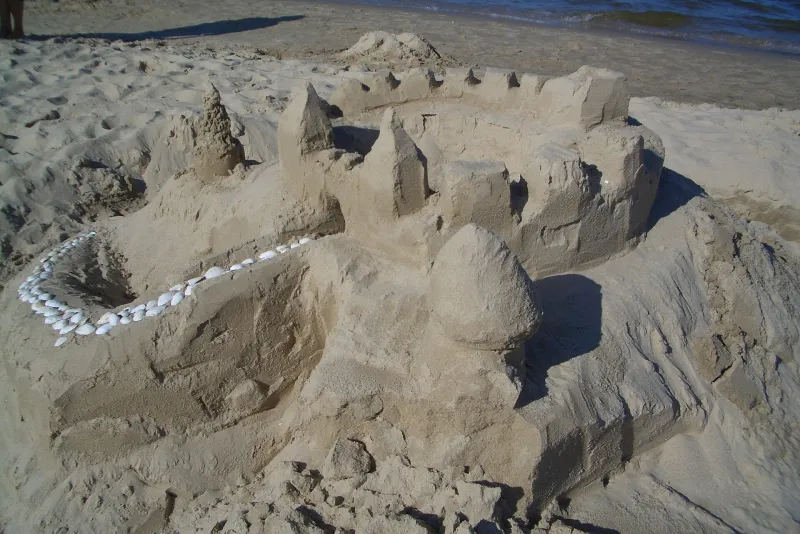
How to build a sandcastle that holds up: where to build, how wet the sand should be, stacking towers and carving, plus Hilton Head's digging rules.
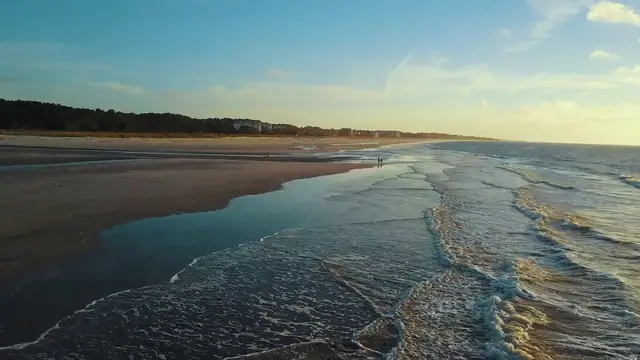
Every named beach on Hilton Head Island — Coligny, Driessen, Folly Field, Burke's, and more — with parking, amenities, and which one is right for your trip.
Frequently Asked Questions
When do sea turtles hatch on Hilton Head?
From about mid-July into October. Each nest hatches 55 to 60 days after it is laid, and the hatchlings come out after dark, when the sand has cooled.
When do loggerhead turtles hatch?
About two months after the eggs are laid. In South Carolina that puts most loggerhead hatching in August and September, with the first nests hatching in mid-July and the last in October.
When do sea turtles lay eggs on Hilton Head?
At night from May through August. A female lays around 115 eggs in a nest about two feet deep, and comes back to nest several more times that summer, about two weeks apart.
What does the Hilton Head turtle patrol do?
Sea Turtle Patrol HHI walks the island’s 14 miles of beach every morning from May 1 to the end of hatching season, finds and marks each new nest, moves nests that are at risk from the tide, counts the eggs after each nest hatches, and responds to stranded turtles.
Can I volunteer with the Hilton Head sea turtle patrol?
Not on a visit. Patrol volunteers train for months under SCDNR rules. You can help by following the lights-out rule, putting the beach to bed each evening, or supporting the patrol with a donation or a nest dedication.
What are the sea turtle lighting rules on Hilton Head?
From May 1 to October 31, any building visible from the beach must turn off outside lights at 10 p.m. and close blinds or switch off inside lights that can be seen from the beach. Report a violation to the Town on (843) 341-4600.
How many sea turtle nests are on Hilton Head each year?
About 250 in an average season, but it swings widely: 179 in 2018, a record 463 in 2019, 237 in 2025 and 414 in 2026.
Are there ghost crabs on Hilton Head beaches?
Yes. Ghost crabs live in burrows on the upper beach and come out at night. They are harmless to people, but they do raid turtle nests and catch hatchlings.
Local guides like this come standard for Guests of Partner Properties — one small part of what a Partner Property gives every guest.
Book Partner Properties