
Hilton Head Beach Rules
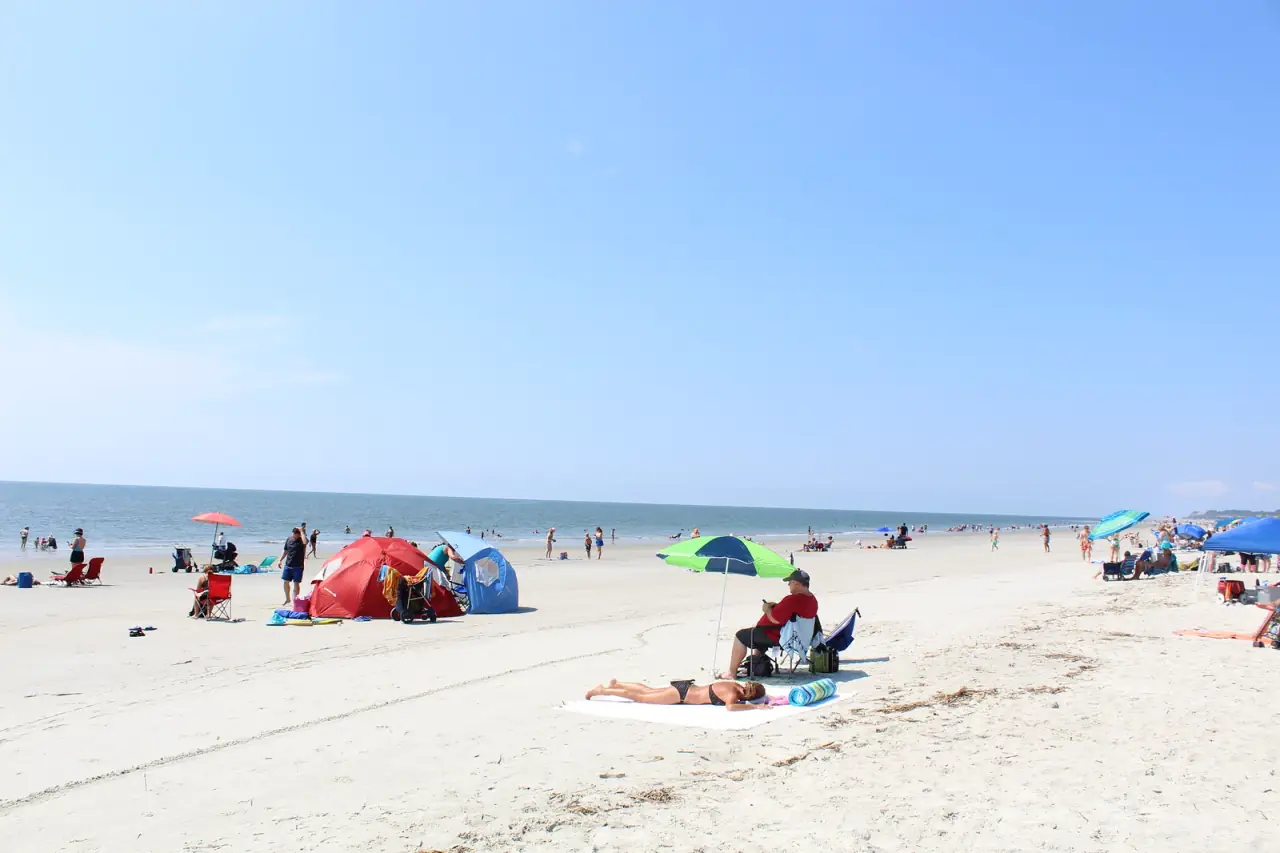
Hilton Head’s beach rules are one Town ordinance that covers every public beach on the island. Here is each rule, with the section of the code it comes from.
The Short Version for Beach Day
Pass this page along before a stay and most of the questions about the beach rules answer themselves. These are the ones people trip over, and each has its own card below with the code section:
No alcohol on the beach, and an open container counts as drinking.
No glass on the sand or in the water.
Dogs: allowed, but not 10 a.m. to 5 p.m. from the Friday before Memorial Day through Labor Day. The full calendar is here.
Holes: no deeper than 12 inches, and filled in before you leave.
Take your tent, chairs and umbrellas home at sunset. Anything left overnight is removed.
Turtle season, May 1 to October 31: beachfront lights off or shielded, curtains closed, after 10 p.m.
No fires and no fireworks. No shark fishing from the beach.
The Rules, One by One
Alcohol
Sec. 8-1-211(20), (21)
You can’t possess or drink alcohol, beer or wine on the beach. The code treats an opened container as evidence of drinking. The only exception is drinking that a South Carolina ABC Commission permit or license specifically authorizes.
Glass
Sec. 8-1-211(6)
All forms of glassware are banned on the beach and in the water. That covers bottles, jars, drinking glasses and glass food containers. Pack drinks in cans, plastic or an insulated steel bottle.
Holes, shovels and sandcastles
Sec. 8-1-211(22)
Holes can’t be deeper than 12 inches. Anyone who digs a hole or builds a sand structure has to put the sand back before leaving, and no later than 30 minutes before sunset. Shovels have to be wood or plastic and under 30 inches long and 6 inches wide, so a metal shovel is out. Metal detecting follows the same rule. For a sandcastle, knock it down before you go.
Tents, umbrellas and beach gear
Sec. 8-1-211(23), 8-1-112(13)
Tents, cabanas, umbrellas, chairs, coolers, kayaks and toys are all “personal property” under the code. There is no daytime ban on any of them, but anything left on the beach between sunset and sunrise is a public nuisance and the Town or its crews dispose of it, at the owner’s risk. Take it all with you at the end of the day. If you rent, see beach chair and umbrella rentals. Sleeping on the beach between midnight and 6 a.m. is also against the code, under Sec. 8-1-211(7).
Dogs
Sec. 8-1-211(8)
Dogs are allowed on every public beach, on a leash or under voice control, with seasonal limits: from the Friday before Memorial Day through Labor Day they aren’t allowed from 10 a.m. to 5 p.m. In April and in the weeks after Labor Day a leash is required at midday. Owners have to remove waste, and a marked shorebird zone near Fish Haul Creek is closed to dogs all year. The dates and hours are in the dog-friendly beaches guide.
Sea turtle lighting
Sec. 8-5-113, 8-5-115
Sea turtle nesting season runs May 1 through October 31 (Sec. 8-5-111). During it, light visible from the beach has to be handled one of these ways between 10 p.m. and 6 a.m.: exterior lights downward-directed and shielded, or turned off; interior light covered by curtains, blinds or solar screens, or turned off. See the sea turtle season guide for when nests hatch.
Fires and fireworks
Sec. 8-1-211(12), (13)
No bonfires, fire pits or charcoal grills. The only fire allowed is for cooking, on a portable liquid-fueled stove. Fireworks can’t be set off on the beach without a permit from the Town.
Lifeguards and flags
Sec. 8-1-221
Lifeguards staff the designated swimming areas at Coligny, Driessen, Folly Field, Alder Lane and Islanders Beach Parks during the official beach season, April 1 through September 30. Shore Beach Services flies a yellow flag for moderate to light conditions, a red flag for rough conditions and a purple flag when jellyfish, stingrays or dangerous fish are in the water. The Town asks you to check with a lifeguard before swimming under a yellow, red or purple flag. Inside those areas, from sunrise to sunset April through September, the code also bans fishing and surf casting, surfboards, frisbees, ball team sports and metal-component games such as metal horseshoes. See jellyfish and stingrays and sharks for what a purple flag means.
Rip Currents: How to Spot One and Get Out
A rip current is a narrow channel of water pulling away from the beach. It is the main danger in the surf here, and it can form on any beach, including those with lifeguards. Swim at a lifeguarded beach, and ask the guard about the conditions before you go in.
How to spot one
Look for choppy or discolored water, a line of foam or debris moving out to sea, or a gap in the breaking waves. The water can look calmer than the surf on either side, which is why people wade in.
What the flags mean
Shore Beach Services flies the flags from March through October. A yellow flag means moderate to light conditions, red means rough conditions and purple means jellyfish, stingrays or dangerous fish are in the water. Check with a lifeguard before you swim under any of them. The lifeguard stands and the flags are listed above, under lifeguards and flags.
If one catches you
Stay calm and don’t fight it. A rip current can move as fast as 8 feet per second, quicker than any swimmer.
Swim parallel to the shore until you’re out of the current, then angle back to the beach.
If you can’t get out, float or tread water and signal for help.
To help someone else, alert a lifeguard or call 911, and throw a flotation device. Don’t go in after them.
Other Things the Ordinance Bans
Vehicles on the beach, apart from Town, law-enforcement and emergency vehicles and permitted use (Sec. 8-1-211(1)), jet skis and other motorized craft (2), and parasailing (3).
Stunt kites in the swim areas, and from 10 a.m. to 6 p.m. April through September elsewhere (Sec. 8-1-211(5)).
Litter on the beach or in the water (Sec. 8-1-211(19)).
Sea oats and dune plants: altering or removing them is unlawful, so stay on the boardwalks and mats (Sec. 8-1-413).
Harming turtles, birds or other beach wildlife (Sec. 8-1-211(10)). A stranded turtle, whale or dolphin should be reported right away; see beached whales.
Who Enforces Them and What a Violation Costs
The beach patrol is Shore Beach Services, which runs the lifeguard stands for the Town, and Town code enforcement officers cover the rest of the sand. Under Sec. 8-1-253 a violation is a misdemeanor, each day counts as a separate offense, and the Town lists fines of up to $1,092.50.
The full text is in the Town’s code of ordinances: Title 8, Chapter 1, Beaches and Chapter 5, Sea Turtle Protection.
More for Your Beach Day
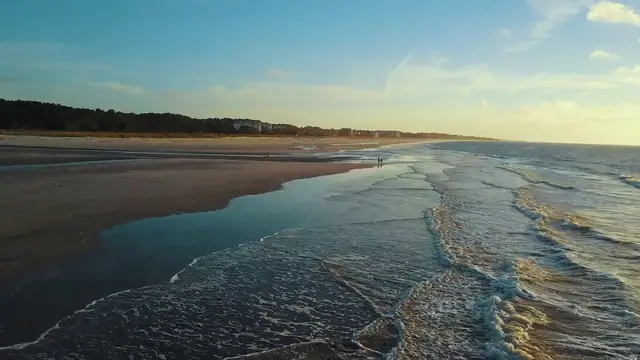
Every named beach on Hilton Head Island — Coligny, Driessen, Folly Field, Burke's, and more — with parking, amenities, and which one is right for your trip.
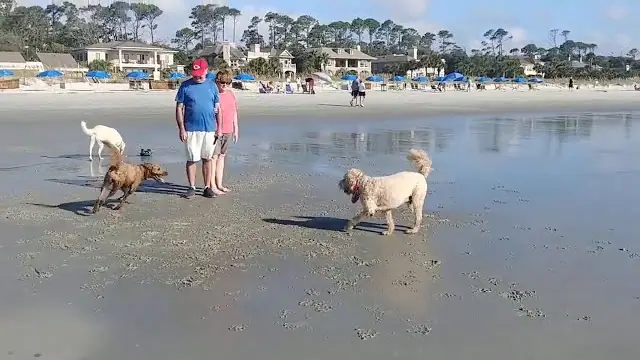
Every Hilton Head beach is dog-friendly, but leash rules change by season and hour — plus a no-dog zone near Fish Haul Creek. Here’s exactly when and where.
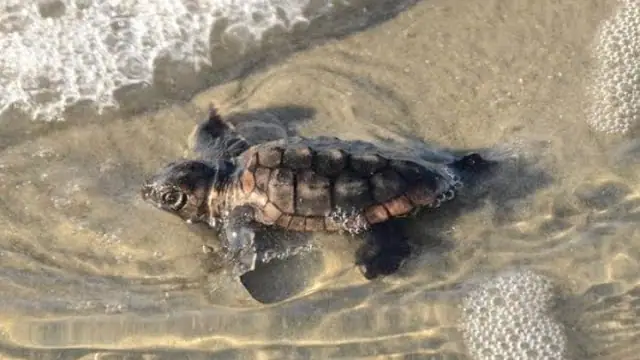
When do sea turtles hatch on Hilton Head? Nesting and hatching months, nests by year, Sea Turtle Patrol HHI and the lights-out rule for beach homes.
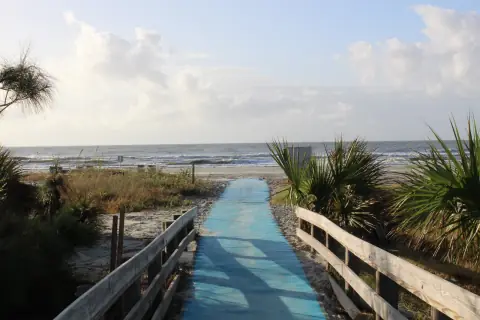
Every Hilton Head beach is public — here’s where the town’s access points are, what parking costs and when, and whether you need a permit.
Frequently Asked Questions
What are the beach rules on Hilton Head Island?
The rules come from the Town of Hilton Head Island’s beach ordinance. The main ones: no alcohol and no glass, dogs not allowed from 10 a.m. to 5 p.m. in peak summer, holes no deeper than 12 inches, gear removed from the beach between sunset and sunrise, no fires or fireworks, no shark fishing from the beach, and sea turtle lighting limits from May 1 to October 31.
Can you drink on the beach in Hilton Head?
No. Sec. 8-1-211(20) prohibits possessing or drinking alcohol, beer or wine on the beach, and an open container counts as evidence of drinking. The one exception is drinking specifically authorized by a South Carolina ABC Commission permit or license.
Can I bring a tent or umbrella to the beach on Hilton Head?
Yes, during the day. Tents, cabanas and umbrellas are treated as personal property, and anything left on the beach between sunset and sunrise is treated as a public nuisance and removed. Take everything with you at the end of the day.
Are fire pits or bonfires allowed on Hilton Head beaches?
No. The only fire the ordinance allows on the beach is for cooking, on a portable liquid-fueled stove. Fireworks need a Town permit.
Who enforces the beach rules on Hilton Head?
Shore Beach Services, which runs the Town’s lifeguards and beach patrol, and Town code enforcement officers. A violation is a misdemeanor under Sec. 8-1-253, each day is a separate offense, and the Town lists fines of up to $1,092.50.
Can I fish from the beach on Hilton Head?
Yes, with limits. Fishing and surf casting are banned inside the designated swimming areas from sunrise to sunset, April 1 through September 30, and baiting or fishing for shark is banned from the beach and within 400 yards of the water’s edge at any time of year.
Local guides like this come standard for Guests of Partner Properties — one small part of what a Partner Property gives every guest.
Book Partner Properties