
Rip Currents and Beach Flags on Hilton Head
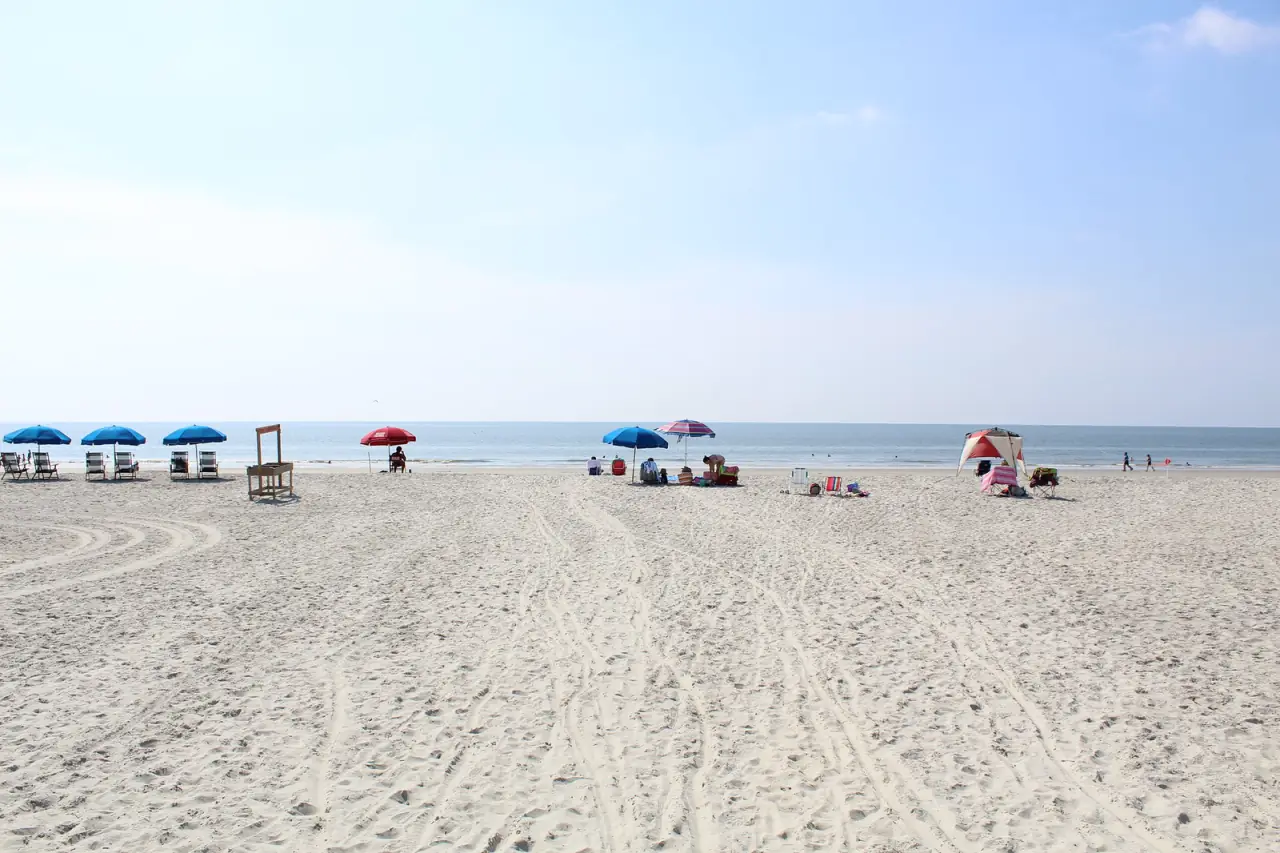
Rip currents are the main danger in the surf on Hilton Head. Here is how to spot one, how to get out of one, what the beach flags mean and where the lifeguards are.
What Is a Rip Current?
A rip current is a narrow channel of water flowing away from the beach. Waves push water up onto the shallow sand, and it has to get back to deeper water; where it finds a low spot it runs out in a fast stream. A rip can move up to 8 feet per second, faster than an Olympic swimmer. It pulls you out, not under: the danger is panicking and tiring yourself out swimming against it.
Hilton Head’s surf is usually gentle, which is exactly why rips catch visitors off guard. They can form on calm, sunny days, and they are common near fixed objects such as piers.
How to Spot a Rip Current
A gap in the waves
A strip where the waves are not breaking, between stretches where they are.
Choppy or churned water
A patch rougher than the water around it.
Different-colored water
A darker or murkier channel running out from the beach.
Foam or debris moving out
Seaweed, foam or bubbles drifting steadily away from shore.
Rips are hard to see from the water, so look from the sand before you go in. If you are not sure, ask the lifeguard where it is safest to swim that day.
Caught in a Rip Current? What to Do
Stay calm
The current will not pull you under. Keep your head and save your energy.
Swim parallel to the shore
Swim sideways, along the beach, until you are out of the pull.
Then angle back to the beach
Head in at an angle, away from the current, not straight at it.
Float and signal
Float or tread water, face the shore, and wave and call for help.
If someone else is caught: alert a lifeguard or call 911, and throw them something that floats, such as a cooler, a boogie board or a life ring. Don’t swim out after them: you could be caught too.
Hilton Head Beach Flags and What They Mean
Rough conditions
Strong surf or currents. Ask the lifeguard before going in, and stay out if you are not a strong swimmer.
Moderate to light conditions
Use caution and swim near a lifeguard.
The Hilton Head beach flag colors are the same on every beach: Shore Beach Services, the island’s beach patrol, flies them at the lifeguard stands from March through October. Ask a lifeguard before you enter the water under a yellow, red or purple flag. To see the beach before you go, check the Hilton Head beach webcams; the rules for the rest of the beach are on the beach rules page.
Where the Lifeguards Are
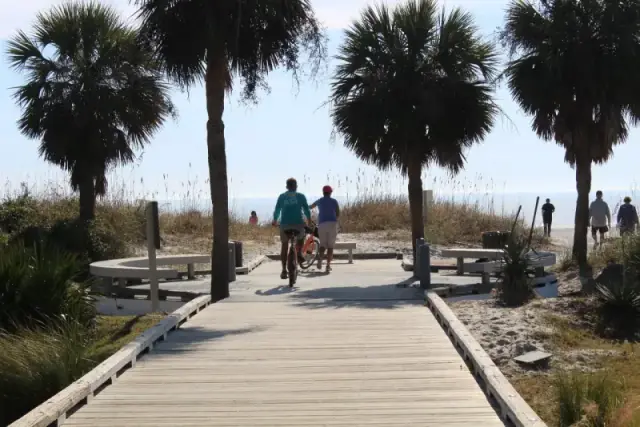
Coligny Beach Park: parking, ADA access, restrooms, and shuttle info for Hilton Head’s most popular beach, steps from Coligny Plaza shopping.
Driessen Beach Park, also called Bradley Beach, on Hilton Head Island: address, parking fees, and amenities for this mid-island beach park.

Folly Field Beach Park on Hilton Head Island: address, metered parking, and amenities for this quieter mid-island beach off Folly Field Road.
Islanders Beach Park on Hilton Head Island is closed for site improvements through May 2027 — what to know, plus nearby beaches open now.
Alder Lane Beach Access on Hilton Head Island: address, parking rates, and amenities for this quiet, sunrise-favorite beach off South Forest Beach Drive.
The official beach season runs from April 1 to September 30. During it, lifeguards watch the designated swimming areas at Alder Lane, Coligny, Driessen, Folly Field and Islanders, plus other busy stretches of beach. Outside those areas, and outside the season, nobody is watching the water: swim with a friend, stay close to shore, and keep children within arm’s reach.
When the Rip Current Risk Is Higher
Rip currents are most likely within a few hours of low tide, though they can form at any time; see Hilton Head tides for today’s times. Strong onshore winds and storms far out at sea, including hurricanes that never come near the island, can send in bigger waves and stronger rips on a clear day.
In beach season, the National Weather Service office in Charleston issues a daily Surf Zone Forecast that names Hilton Head Island, with the rip current risk (low, moderate or high), the surf height and the water temperature. The beach patrol follows the Weather Service’s guidance when it chooses the flags.
Frequently Asked Questions
Updated
Are there rip currents on Hilton Head?
Yes. The surf is usually gentle, but rip currents form here, including on calm, sunny days. They are the main danger in the water.
What do the beach flags mean on Hilton Head?
Red means rough conditions, yellow means moderate to light conditions, and purple means jellyfish, stingrays or dangerous fish in the water. The flags fly from March through October.
What should you do if you are caught in a rip current?
Stay calm, swim parallel to the shore until you are out of the current, then swim back at an angle. If you can’t, float or tread water and wave and call for help.
Which Hilton Head beaches have lifeguards?
From April 1 to September 30, the designated swimming areas at Alder Lane, Coligny, Driessen, Folly Field and Islanders, plus other busy stretches of beach.
When are rip currents most dangerous?
Within a few hours of low tide, in strong onshore winds, and when storms or hurricanes far offshore send in bigger waves, even on a sunny day.
Your beach week starts here
Compare villa and beach home prices from local rental companies side by side, and catch last-minute deals before they’re gone.
Property manager? Partner with us