
Shark Teeth on Hilton Head: Where and How to Look
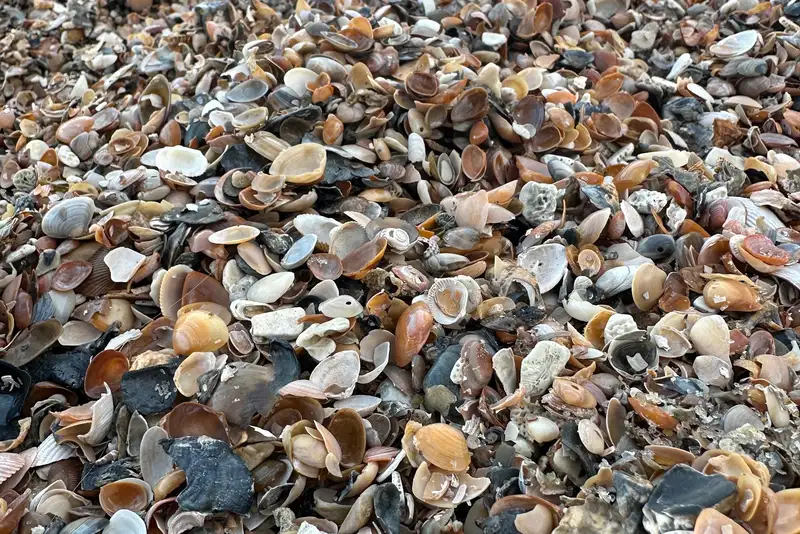
The island’s teeth are few and small. Here is where to sift for them, how to tell one, and where to go for more.
Book a shark tooth trip
Live availability. Booking opens here, in each operator’s own booking system.
Browse 1 activity

Booked through FareHarbor, the island operators’ own booking system. HHI.com may earn a commission.
- On the island
- uncommon, and mostly small
- Where to look
- shell piles at low tide
- What to look for
- a shiny, dark gray or black triangle
- Sure thing
- a boat trip to Shark Tooth Island
You can find shark teeth on Hilton Head, but not many. The island’s beaches are wide and sandy, and the teeth that wash up here are few and mostly small. Your best chance is to sift the piles of broken shell at the tide line on a falling or low tide. For a real haul, take a boat to Shark Tooth Island in the Savannah River, or drive about an hour and a quarter north to Hunting Island State Park.
How to Spot a Shark Tooth
Fossil shark teeth are usually gunmetal gray to black and look smooth and matte, and some have a hint of blue. That blue tint is the quickest way to tell a tooth from a piece of fossil oyster shell, which is the same dark color. Look for a small triangle, often with a darker, wider root at the top. Very dark teeth are the oldest, often millions of years old, and they are the ones you are most likely to find. Beige or pearly white teeth fell out of a shark much more recently.
Sharks shed and regrow teeth all their lives, so a single shark leaves thousands behind. That is why teeth turn up at all on a beach where you never see a shark.
Where to Find Shark Teeth on Hilton Head
The shell line at low tide. Walk the strip of crushed shell the last high tide left behind and look closely, a small patch at a time. Teeth hide among the shell pieces, not on the clean sand.
Fish Haul Beach Park. The island’s best shelling beach, on Port Royal Sound. At low tide the sand flats and shell beds there give you the most ground to search.
After storms and beach renourishment. Rough seas and sand pumped in from offshore both bring up new shell, and with it the odd tooth. Check the shell line in the days after a storm.
Any time of year. There is no shark tooth season. Rangers say the tide matters far more than the month.
You may dig in the sand while you search, but the Town asks that holes be no deeper than 12 inches and that you fill them back in before you leave, so nesting sea turtles and other beachgoers don’t fall into them. Low tide comes twice a day; check the Hilton Head tide times before you go.
Shark Tooth Island by Boat
Shark Tooth Island, also called Jones Island, sits in the Savannah River and was built up from sand and mud dredged out of the shipping channel. The dredging brought up old seabed full of fossils, so its beach is scattered with shark teeth, including the odd megalodon tooth. The island can only be reached by boat. Outside Hilton Head runs shark tooth trips by boat from Shelter Cove Marina through the tidal creeks toward the Savannah River, and people also find bits of pottery, whale bone and petrified wood.
Better Beaches for Shark Teeth Nearby
Hunting Island State Park. About an hour and a quarter north, past Beaufort. Rangers there say teeth and shells collect around the sand pillars at low tide. The boneyard, with its fallen trees, is the poorest spot.
Sands Beach, Port Royal. Rangers call it the best place in Beaufort County for shark teeth: a small beach at the end of Port Royal’s boardwalk, about 45 minutes from the island.
Folly Beach, near Charleston. Often called the top shark tooth beach in South Carolina, about two and a half hours’ drive.
More Beachcombing
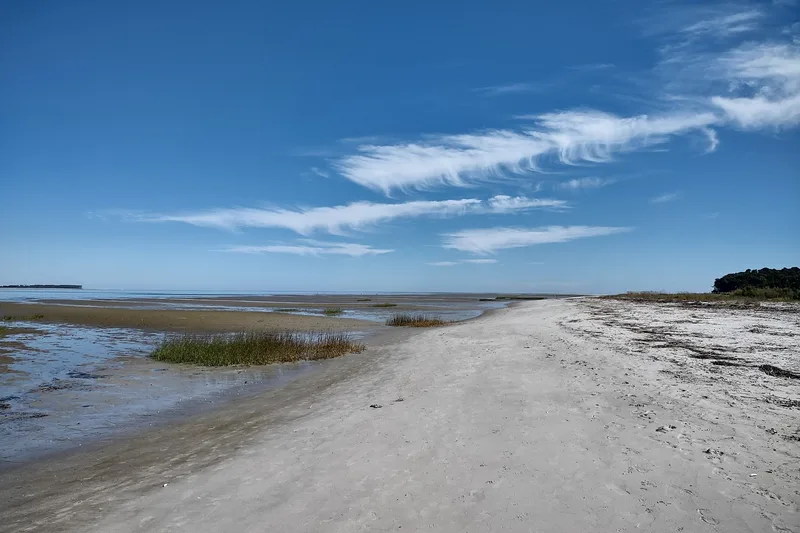
Fish Haul Beach Park, formerly Mitchelville Beach Park, on Hilton Head Island: address, parking, and amenities for this sound-side beach in Bay Gall.
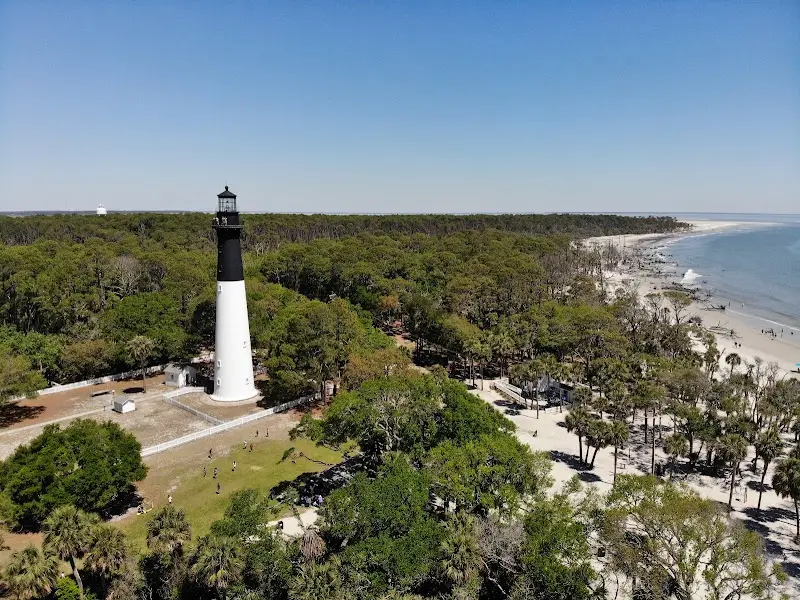
Hunting Island State Park is about 70 minutes from Hilton Head: climb SC's only public lighthouse, walk Boneyard Beach, camp, plus hours and admission.
Hilton Head shelling: the best beaches for shells and shark teeth, the tides to plan around, what you can keep, and how to reach the Vanishing Island.
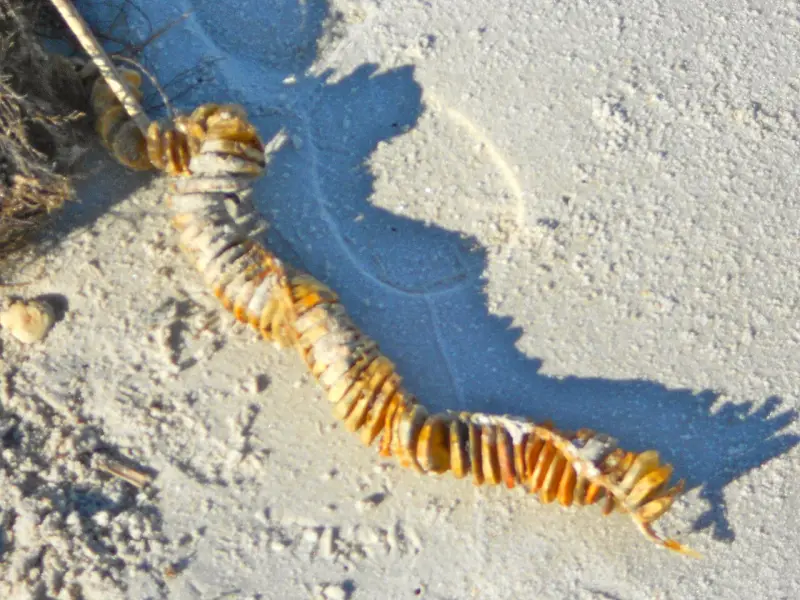
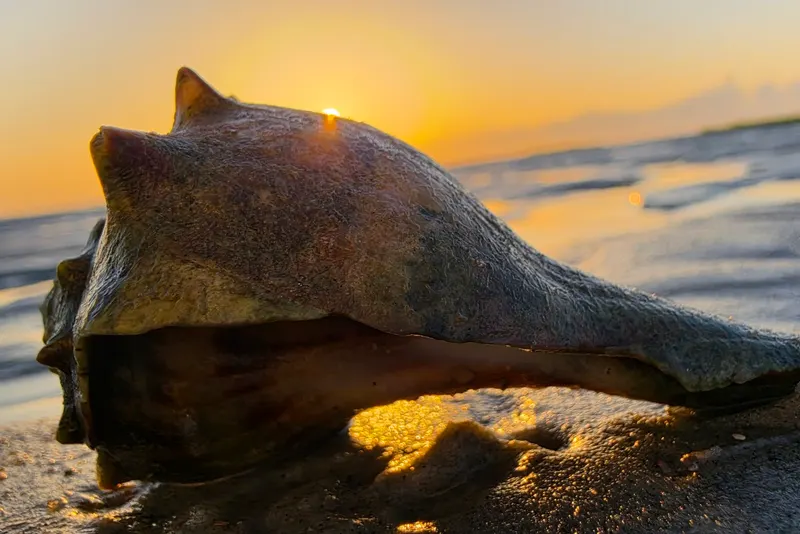
The sea whelk is the big spiral shell most people call a conch. South Carolina's four whelks, their egg cases, where to find them and the live-shell rule.
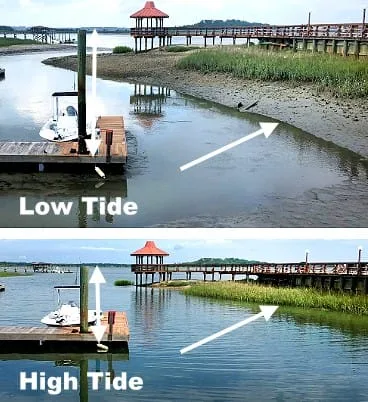
Hilton Head tide chart: today's and tomorrow's high and low tides for Coligny Beach and the ocean beaches, Calibogue Sound and creeks, plus a 30-day calendar.
Frequently Asked Questions
Can you find shark teeth on Hilton Head?
Yes, but they are uncommon and mostly small. Search the shell piles along the tide line on a falling or low tide, and look closely: they hide among the broken shell, not on clean sand.
Where is the best place to find shark teeth on Hilton Head?
The shell beds at Fish Haul Beach Park at low tide, and the shell line on any beach after a storm. For many more teeth, take a boat trip to Shark Tooth Island in the Savannah River.
What does a shark tooth look like on the beach?
A small triangle, usually gunmetal gray to black, smooth and slightly shiny, often with a hint of blue. Fossil oyster shell is the same dark color but has no blue tint and no triangle shape.
When is the best time to look for shark teeth?
Low tide, and the hours either side of it. There is no season for shark teeth, so any month works. The days after a storm are good, because rough water brings up new shell.
What is Shark Tooth Island?
A small island in the Savannah River, also called Jones Island, built from material dredged out of the shipping channel. Its beach is known for fossil shark teeth, including megalodon teeth, and it can only be reached by boat.
Can I keep the shark teeth I find?
Yes. Fossil teeth are not live animals, so you can keep them. Just fill in any hole you dig, and keep it no deeper than 12 inches.
Your beach week starts here
Compare villa and beach home prices from local rental companies side by side, and catch last-minute deals before they’re gone.
Property manager? Partner with us