
Whelks on Hilton Head: The Shells People Call Conchs
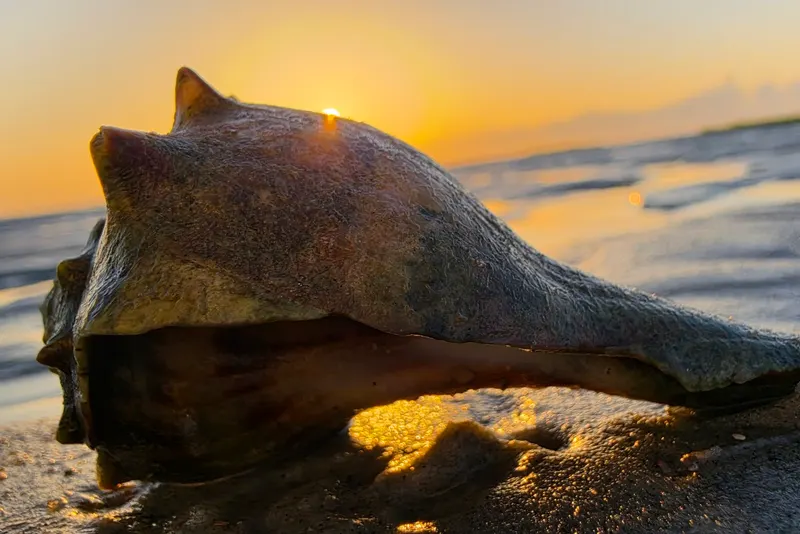
Knobbed, channeled, lightning and pear whelks: how to tell them apart, where to find them and which ones to leave.
- Most common
- the knobbed whelk
- Best beach
- Fish Haul Beach Park at low tide
- Best time
- after winter storms and heavy seas
- The rule
- a whelk with an animal inside goes back
The big spiral shells on Hilton Head’s beaches, the ones most people call conchs, are whelks. A sea whelk is a large sea snail that lives on the sand flats and oyster beds of the coast, and four kinds live in South Carolina’s waters. One of them, the knobbed whelk, is far more common than the other three, so a whole whelk you pick up here is most likely a knobbed one.
What Is a Sea Whelk?
A whelk is a snail with a heavy, pear-shaped shell that winds around a central point and ends in a long, open channel at the bottom. Living whelks close up behind a hard, brownish plate on the foot, like a trap door; it is rarely found with an empty shell. True conchs are a different family that lives in South Florida and the Caribbean, so the “conch” shells on a Carolina beach are almost always whelks.
Whelks eat clams and oysters. A knobbed or lightning whelk grips a closed clam and uses the lip of its own shell as a hammer, chipping at the edge until it can pry the clam open. That is why so many whelk shells you find have a broken, ragged lip, and why some clam and ark shells on the beach have chipped edges.
The Four Whelks of South Carolina
Knobbed whelk. The common one. A thick shell with a row of knobs around the top of the widest turn, opening on the right as you hold it point up. The inside ranges from brick red and dark orange to almost white. A big one is probably a female, since the females grow larger. It is Georgia’s state seashell.
Channeled whelk. The second most common, though knobbed whelks outnumber it by roughly 30 to 1 in South Carolina. Look for a deep groove where each turn of the shell meets the next and small beads instead of knobs. The shell is thinner, and live ones wear a fuzzy brown skin.
Lightning whelk. The left-handed whelk: hold it point up and the opening is on the left. Its pale sides carry dark streaks, the “lightning”. It is the largest whelk in South Carolina, up to about 16 inches, but it is rare here and far more common in Florida. Big ones sometimes wash up in spring after a hard winter of storms.
Pear whelk. The rarest of the four, and the smallest, seldom past 6 inches. It has a smooth, rounded top with no knobs, beads or groove. Its shells turn up most often on the southern part of the South Carolina coast, which includes Hilton Head.
Whelk Egg Cases
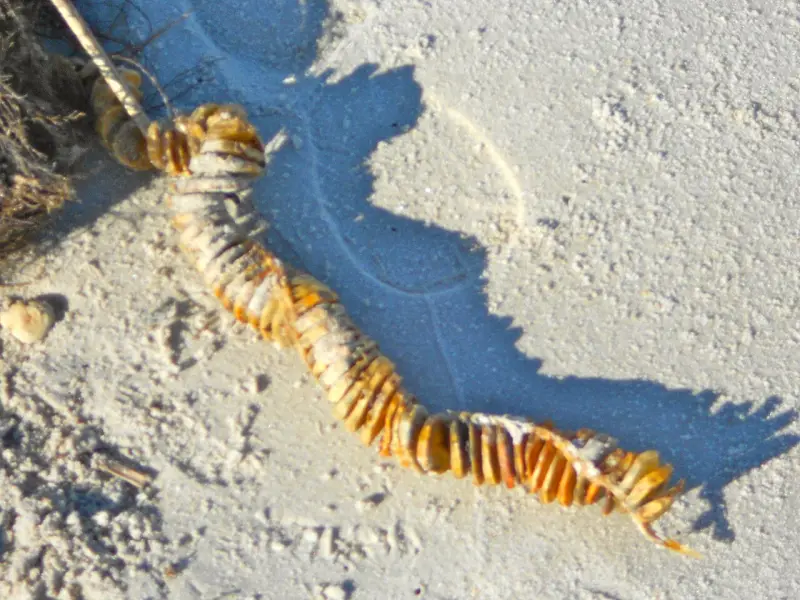
The long, papery strings of flat discs that wash up on the beach are whelk egg cases. Each disc is a capsule that held eggs, and the whole string is anchored in the sand where the female laid it. The young whelks develop inside and emerge through a small hole in each capsule, so a string on the beach with holes in it has already hatched.
In South Carolina, knobbed whelks lay their strings twice a year, in April and May and again in September and October, when the water is around 68°F. The fall laying is the bigger one. Fresh strings turn up on the beach most in late spring and fall. A channeled whelk’s capsules are the odd ones out, each with a single sharp edge.
Where to Find Whelks on Hilton Head
The best place is Fish Haul Beach Park on the north end, where the beach faces Port Royal Sound and a low tide uncovers a wide flat of sand and shell. Go in the two hours either side of low tide, and check the Hilton Head tide times first. Whole whelks are most often washed in after heavy seas, so the days after a winter storm or a strong northeast wind are the best for beachcombing. Live whelks spend their time on the tidal sand flats and around oyster bars.
For the other shells you are likely to find and the sandbar you can reach by boat, see the full Hilton Head shelling guide.
Can You Take a Whelk Shell?
An empty shell, yes. A live whelk, no. The Town of Hilton Head Island prohibits harming or removing live beach animals, and its rules name conchs, the local word for whelks, along with sand dollars and starfish. Fines and court costs can reach $1,092.50 per offense.
Look inside the opening. If you see a fleshy foot, a hard brown trap door or the legs of a hermit crab, it is someone’s home. Set it back in the water.
Leave egg strings where they are unless they are dry and full of open holes.
Fill any hole you dig to reach a shell. Holes can be no deeper than 12 inches.
More Beachcombing
Hilton Head shelling: the best beaches for shells and shark teeth, the tides to plan around, what you can keep, and how to reach the Vanishing Island.
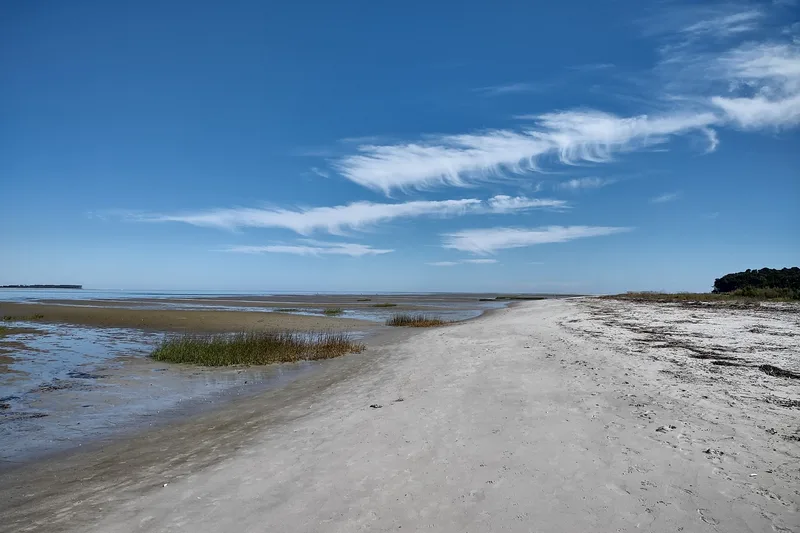
Fish Haul Beach Park, formerly Mitchelville Beach Park, on Hilton Head Island: address, parking, and amenities for this sound-side beach in Bay Gall.
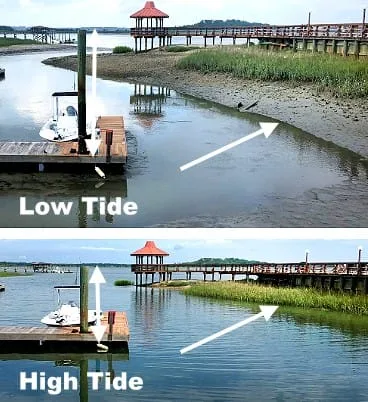
Hilton Head tide chart: today's and tomorrow's high and low tides for Coligny Beach and the ocean beaches, Calibogue Sound and creeks, plus a 30-day calendar.
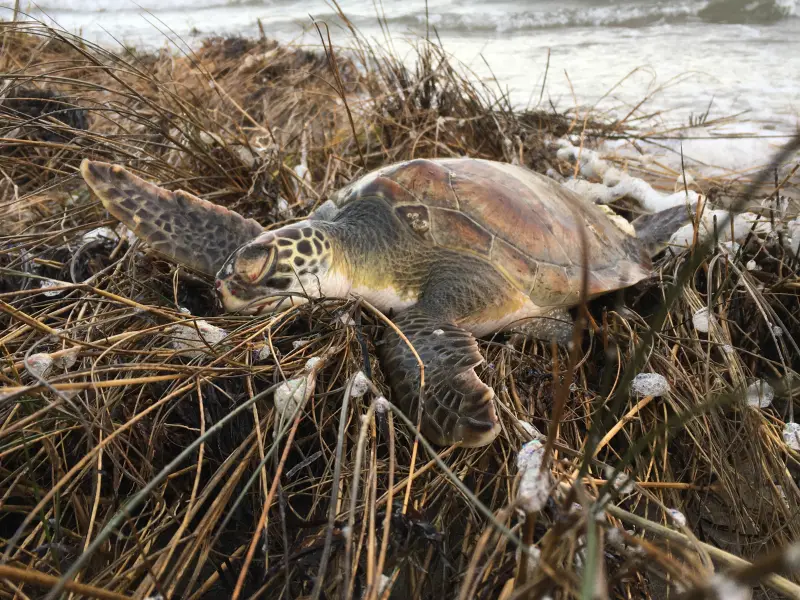
Cold stunning is what happens when winter water chills a sea turtle until it can't swim. When it happens on Hilton Head, and who to call if you find one.
Frequently Asked Questions
What is a sea whelk?
A large sea snail with a heavy, pear-shaped spiral shell. It lives on sand flats and oyster beds and eats clams and oysters. On Hilton Head most people call whelk shells conchs.
Is a whelk the same as a conch?
No. True conchs live in South Florida and the Caribbean. The big spiral shells on South Carolina beaches are whelks, most often knobbed whelks.
What is a knobbed whelk?
The most common whelk in South Carolina: a thick shell with knobs around the top of its widest turn and an opening on the right. It is Georgia’s state seashell.
How do you tell a lightning whelk from a knobbed whelk?
Hold the shell point up. A lightning whelk opens on the left; a knobbed whelk opens on the right. Lightning whelks are rare in South Carolina.
What are the strings of discs on the beach?
Whelk egg cases. Each disc is a capsule the young whelks grow in, and a string with small holes in the discs has already hatched.
Can I keep a whelk shell from a Hilton Head beach?
Yes, if it is empty. If a snail or a hermit crab is living in it, put it back in the water: the Town prohibits removing live beach animals, with fines and court costs up to $1,092.50.
Local guides like this come standard for Guests of Partner Properties — one small part of what a Partner Property gives every guest.
Book Partner Properties